The Mania of Finding Meaning
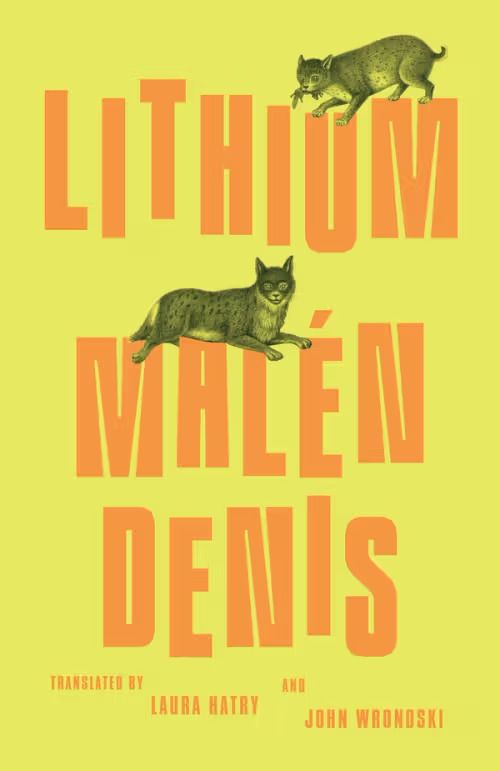
While fans are drawn to a book or film because of the people who created it, a work of art also attracts its audience through other means, including superficial ones like its title. But even once a reader or viewer has been drawn in, the job of the title is not always finished: Authors will frequently (and increasingly in films) avail themselves of a title drop, which is the term of art for when a character says the name of the movie or book they’re in. Most of the time, this trope appears as a bit of playful self-reference, as when Doc Brown tells Marty that “next Saturday night, we’re sending you back . . . to the future!” But a title can also be pulled from the text to enhance or emphasize the meaning of a story, like the moment Atticus Finch tells Gem and Scout, “Shoot all the bluejays you want, if you can hit ’em, but remember it’s a sin to kill a mockingbird.” An author can also highlight a specific aspect of their story by ignoring their title altogether, not only not mentioning it but never even alluding to it—which is the case with Lithium, the debut novel by Argentine artist and writer Malén Denis, now available from New Directions in Laura Hatry and John Wronski’s English-language translation.
The slim volume, originally published in 2020 as Litio, is presented as a journal of sorts recording the genuine and often painfully raw emotions of an unnamed 29-year-old woman in Buenos Aires. She lives on an inheritance and the odd freelance gig, and even though she’ll never run out of money, her analyst says she needs to find a purpose in life. With unlimited free time, she watches “the news passing through social media, the infinite scroll,” then panics about what she sees, imagining “the apocalypse the new government’s ushering in: looting, political persecution, Gotham City, forced to burn our own books.”
While the narrator’s musings are consistently introspective, her writing is somewhat paradoxically directed (at least, rhetorically) at an outside audience—specifically, her former boyfriend, also unnamed, for whom she retains conflicting, evolving feelings. Her ex has been institutionalized after some sort of presumably violent altercation with the woman he was most recently living with, Violeta, who has hastily moved back in with her parents, leaving two cats and two new kittens unattended in the vacated apartment. Because the narrator is familiar with the apartment and its felines, having gifted the female Materia to her ex, she is enlisted to house-sit by her ex’s mother, who has just gotten a new armchair and so can’t possibly be expected to take in the kittens and their razor-sharp claws. Familiarity grants no favors, however, and right off the bat, Materia defensively sinks her claws into the narrator’s leg—“probably one big metaphor for something”—causing her to lash out and shatter a glass door with her arm, a situation she summarizes with the humorous mock headline: “Girl with no Job or Future Bleeds to Death in House of Psychotic Ex Following Mysterious Incident with Hyper-Maternal Cat.”
Though the word lithium never appears in the novel, there are a few ways it could be relevant. The most obvious is that the ex has been placed on the mood stabilizer because of whatever happened with Violeta. It’s clear some medication is involved in his treatment, since he has told the narrator, “We’ll be able to talk better when I’m taking fewer pills.” The reader is never told what those pills are, but they seem to be affecting his personality, with the narrator writing: “The way you’re using words is like a zombie, it’s you and it’s not you at the same time.” As with a real journal, the narrator changes subjects without any sort of explanation and interjects thoughts not explicitly explained. However, in a passage seemingly related to her ex’s diagnosis, she writes, “They’ve ruled out that your problem is chemical, repeating the same verdict in various ways: There was no toxin involved, it wasn’t a result of intoxication, it’s a structural issue, inevitable.” Whatever the case, the others around her don’t share the her charitable attitude toward her ex. Juan, who has his own amorous designs on the narrator, tells her, “You know perfectly well what I think about that sick bastard.” And Violeta, perhaps most understandably, tells her, “You shouldn’t have to help that son of a bitch anymore.”
In addition to being reintroduced into an environment guaranteed to stir up lingering emotions, the narrator is trying to cope with a raft of consequential challenges, including a swollen voice box; the legal and psychological ramifications of a recent car accident; and the loss of her mother, who died by suicide just over a year earlier. Her mother clearly had mental health struggles, so it’s also possible she was taking lithium, though the narrator is stingy with the details. What we do know is that “before [her] mom got sick,” the narrator was training to be a ballerina, and then at some point, “Mom didn’t get out of bed for a year. That’s how it started.” After that, her mother’s condition went from crying jags to almost burning down the house.
The narrator has ongoing battles with her mental health as well, including suicidal ideation and perhaps even a past attempt: “It’s not like I really want to hurt myself, it was just an imaginative reflex that invoked the scenario, but it does give me pause. It’s certainly fascinating what it reveals, though I could never just surrender myself to injury that way, however attractive I find the idea of someone risking everything to save me.” That desire for attention, for validation through “someone risking everything” for her, has been a longtime burden. She feels like “an apparition, a floating mind,” and at other times “all pixelated” or “like [she’s] been dyed.” She hints at a past eating disorder when she writes that she wants “to be thin again, but the healthy kind of thin.” She’s had a driver’s license for a dozen years but doesn’t drive. She doesn’t like to leave the house, but when she does motivate herself to go out, she doesn’t come home until dawn because she’s afraid of “the dark corridor” leading from the street. She had started using drugs with her ex, whom she met at a party when he was 16 and literally “breathing fire,” and wonders if he saved her by leaving her.
It’s unclear whether or not her drug use was a serious problem or just recreational, but what is clear is that her feelings for her ex continue to hamper new relationships. Her ex made her feel “chosen,” “different,” while many of the subsequent men she has dated have resulted in “asymmetrical desire” and regret: “Fucking makes me sad, though it’s not instantaneous.” She is comforted by the “strange freedom” granted by her ex being away in treatment, but she can’t move on, writing that she “can’t have a boyfriend that isn’t you. I don’t have the energy to keep up the charade.” Even with Francisco, another man she starts dating and one for whom she seems to have genuine affection, her interactions feel like “a performance, everything slightly staged, for someone who isn’t even watching.”
One of the novel’s darkest episodes comes when the narrator has a miscarriage in the bathroom: “I stand in front of my lost thing, I don’t dare refer to it any other way.” The ensuing imagery is shockingly visceral, including “a blood clot hanging from a grayish alien that resembles a lizard, intense abdominal pain.” Throughout the novel, Denis repeatedly calls attention to familiar things in ways I have never imagined. In perhaps the most oddly indelible scene of the entire novel, the narrator recalls her “mother looking in through the half-open door the day that Barbie had sex with Ken for the first time.” Hatry and Wronski often let these ideas unfold slowly via prepositional phrases rather than possessives. The “mouth of a furious horse” is seen in Picasso’s Guernica, and “harmless” electronic music “that’s never made anyone cry” will disappear “like the skin of dinosaurs.”
A little more than halfway through the novel, the narrator rather concisely lays out her motivation for writing: “I try to discover a sign, a message, that mania for finding meaning in what troubles us. I’m worried about the future, about time, and, above all, if there’s a way to know what I’m supposed to be doing. I don’t know what I am.” Not who I am, but what. Things haven’t gotten much clearer by the end of the novel, because a familiar pattern is starting to repeat itself, her ex “having entered one of those phases of not answering again”—an unspeakably difficult and painful sensation for anyone who has had difficulty saying goodbye to someone they know needs to be consigned to the past. It can take years of being hurt, of being rebuffed. And sometimes it just doesn’t happen. Another interpretation of the novel’s title could come from the fact that lithium is one of the more unstable common elements in our universe, preferring to shed its electrons and bond with another atom around it rather than remain in its isolated elemental state. Pure lithium simply doesn’t exist in nature. And maybe for the narrator, that’s all she can hope for, a return to the comfortable existence she once knew: “I had a life, a house, a personality, damaged perhaps, or ‘overly susceptible to influence,’ but it was mine. I want to go back to a state that felt logical, at least within my own sphere of possibility.”
Cory Oldweiler is an itinerant writer who focuses on literature in translation. In 2022, he served on the long-list committee for the National Book Critics Circle’s inaugural Barrios Book in Translation Prize. His work has appeared in the Boston Globe, Star Tribune, Los Angeles Review of Books, Washington Post, and other publications.

More Reviews