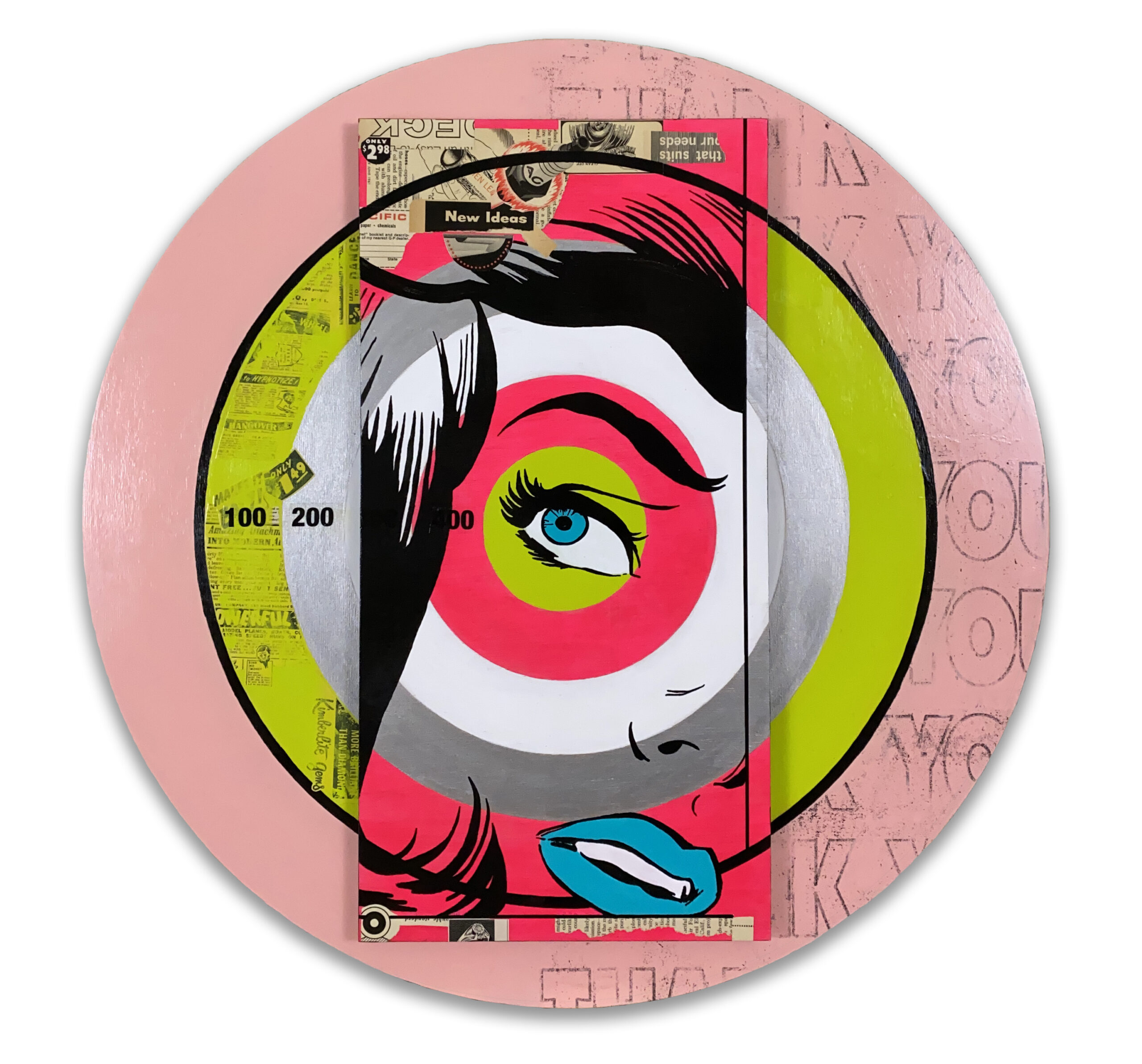
They told her not to look at the news or open the papers. They suggested she avoid social media and, if possible, stay home for at least a week. She went out anyway. And, on the corner, three men with slicked-back hair approached her and asked absurd things, things she found distasteful and that made her want to scream. They glommed onto her body. Spit flew as they talked. She anxiously strode off to escape the wetness of those voices, the recorders and worn shoes, and tripped over her own feet. None of them helped; they just kept pelting her with senseless, even cruel questions, their teeth aggressively in her face.
Amid the confusion she felt an immense wave of nausea.
She vomited and ran off.
That morning, she didn’t go to the university campus but to the park. She thought, contrary to what her colleagues said, that breathing fresh air would do her good. She could be somewhere new and watch dogs of different sizes rolling around in the dirt and marking the trees as if the world were a simple place. So she went to her neighborhood park, the same one where Guadalupe had skated every Wednesday, and almost enjoyed the barks and birds, the insects and statues. She almost forgot about the rash on her neck, her chewed nails. The day was dazzling in an unsettling way: The light had a whitish tone, the color of a clean bone, and people weren’t talking to one another, though they were smiling at length in the gardens. Farther along, on the edge of the grove, a group of children were playing ball. Her hands started to shake, and the tremors reminded her that the world was a horrible place to abandon your body.
Only four days had passed since the thing with the head.
The university had made her take leave. According to the dean, it was essential that she had time to rest. As if such a thing were possible, she thought. As if it were possible to sleep, eat, breathe, shower, or brush her teeth. There were moments when she didn’t even feel like she could get her limbs out of bed and thought about Guadalupe’s, about the lost place on Earth where they would be resting, alone, like fruit shriveling up at night. Perhaps they hadn’t even been buried in the city, she sometimes concluded, biting her tongue. Maybe the girl’s arms were in a field somewhere and her legs on the side of Tungurahua or Cotopaxi. The previous morning, she had dreamed about a frail dark torso dancing in the middle of the jungle, writhing, pushing out the ribs and tiny breasts. It was a floating torso that lit up like a firefly, rising up to the high branches of a blood tree.
When they brought her in to give a statement, the police told her they didn’t find Guadalupe’s body, only her head. But I was the one who found the head, she raged. The police hadn’t done anything.
To get back, she had to avoid the journalists—“How did you feel when you saw the girl’s head?” “How close were you to your neighbors?” “Did you know Dr. Gutiérrez?” “Was he an aggressive man?” “How would you describe the relationship between the doctor and his daughter?” “Are you going to move to another neighborhood?”—and when she closed the door, she noticed, for the first time in days, the clothing thrown on the sofa, the dirty plates, the papers on the floor. The nightmares came and went if she managed to sleep, but most of the time she felt anxious, incapable of keeping her eyes shut. More than one night ended with her sitting on her patio, watching the wall that bordered Dr. Gutiérrez’s yard. It wasn’t that she wanted to do it; she couldn’t stop herself. Her mind went back to that wall, to that Monday morning, the dry, plastic sound against the bricks that she’d been listening to for hours and that she thought was the bouncing of a ball.
It surprised her that people in the neighborhood would just keep living their lives. There were reporters crawling the streets, and on the television they talked of nothing but Dr. Gutiérrez and his daughter, yet the children still played happily on the sidewalks, the ice cream vendor smiled, grandmas chatted in the sun, teens pedaled their bicycles, parents came home at the same time as always, ate dinner, and turned off the lights. She, on the other hand, couldn’t get back into her routine. The daily grind felt like a dead animal, impossible to resuscitate. That’s why she quickly ignored the advice from her friends: She turned on the television, opened the newspaper, went on social media. There, people were talking about the brutal decapitation of a 17-year-old girl, about how her father, a 60-year-old celebrated oncologist, had killed her. They talked about femicide in the middle and upper classes. But more than anything else, they talked about how the crime had been discovered; about how Dr. Gutiérrez had wrapped his daughter’s head in plastic and packing tape; about how he was, as the coroners determined, playing ball with her head for four days on his patio; about the poor neighbor who woke up one Monday listening to thuds on the wall around her yard; about a fortuitous kick that sent Guadalupe Gutiérrez’s head soaring toward the house next door; about how the neighbor picked up the package and immediately understood; about the smell; about fainting; about the arrival of the police; about the way the doctor surrendered, without putting up a fight, while drinking a cup of tea.
She rubbed her neck, almost pinching it, as she remembered her neighbor’s grayish face walking to the police car.
That afternoon she had managed to sleep and dreamt about Guadalupe’s perfect skull flying through the neighborhood, chomping the air, resting among the flowers. She had never exchanged more than two or three words with her. She was never interested in knowing anything about her life. She saw her rarely, and always under the same circumstances: in her private-school uniform getting off the bus or skating toward the park. She was a girl like any other. Her hair was long and dark, thick tresses that stuck out of the wrapping her father had used. Once, she even saw the doctor kiss her forehead before she got on the school bus.
She got nauseous thinking about it.
Photographs of the Gutiérrez family quickly leaked on social media. Nobody knew who did it, but people shared them in huge numbers, and she was horrified by the exposition of the life of someone who could no longer defend themselves: the way that under the hashtag #justiceforlupe others retweeted private images, personal messages that the doctor’s daughter had sent to her friends, information about her interests and hobbies. There was something gloomy and dirty in that public preoccupation that delighted in the pain, in the hunger for more sordid details. People wanted to know what a father was capable of doing to his daughter, not out of indignation but out of curiosity. They felt pleasure from the invasion of a dead girl’s private world.
If she closed her eyes, she saw the head flying toward her patio and bouncing twice on the ground. It was a vision more than a memory because the head was the size of an avocado pit, and then she buried it and watered it and watched it grow into a tree with dark tresses that looked like swings.
Six days after the doctor’s arrest, she started to hear noises coming from the empty Gutiérrez house. Footsteps and murmurs, sounds of objects moving, doors opening and closing. The home had been sealed off, and the only people authorized to enter were the police on the case; but the whispers came in the early morning and lasted until just after daybreak. At first, the fear made her hide out in her room, draw the curtains, and cover her ears. She pictured Guadalupe’s decapitated body searching for her head in the room’s recesses, groping around like the blind body she was, and she panicked. The doctor’s daughter once knocked on her door and said: “Hi, how are you? Could I borrow some sugar?” She had forgotten about that encounter, remembering it only when the sounds of life filtered over. She remembered that Guadalupe came into the living room as she dropped a handful of sugar into a napkin. She wasn’t sure if she had started a conversation, but the girl definitely looked happy. She remembered that when she gave the girl the sugar, she saw a bruise on the girl’s arm and didn’t ask about its origin. She also remembered Guadalupe had asked to use her bathroom, and she’d said no, that she had to head out. “I’m sorry, I’m running late to the university,” she told the girl. She remembered being annoyed at the request, at the continued waste of her time.
She buried her face in the pillow. Maybe she was trying to get away from her father for a bit, she thought. And I didn’t even give her that.
Lately the guilt made her think like that, especially at night. But the worst was when she was sweating and could almost feel the plastic-wrapped rotting head in her hands. She wondered why she’d picked it up from the ground that morning, why she’d handled it if she already knew, from the moment she stepped foot on the patio, what it really was.
How much force is necessary to rip a person’s head off? She occasionally wondered, ashamed, looking at herself in the mirror. How much desire? How much hatred?
The noises kept her shut up in her room until one night, from the second-floor window, she managed to see into the Gutiérrez yard. All the dirt was dug up, the plants ripped out; in the middle, seven women were sitting in a circle. Her first thought was to call the police, but she had no interest in being interrogated, in hearing the sirens, in describing dozens of times what she had or hadn’t seen, what she had or hadn’t heard. She wanted to sleep peacefully again, to go back to the university, get past the palpitations and rashes, soothe the tree of heads that was growing rampantly in her thorax. But once she saw those women, she couldn’t stop thinking about them. The following days she spied on them in the early hours and listened to them sing, murmur unintelligible prayers, wander through the grass and house. She noticed they were different ages: some 20, others 40, others 60 or 70 or 80. She watched them do strange rituals, grabbing one another’s hands and securing them around their necks, for hours. They dressed in white and wore their hair down to their waists. She didn’t know how they had managed to get in, but she made it a habit to stay up and spy on them. Sometimes she did it from the second-floor window; other times, from the cold patio wall where she pressed her ear when the women’s prayers and chants barely went above a whisper. Unique characteristics in the group of intruders began to emerge. She noted, for example, that they were burying rue in the dug-up dirt. That in their songs and prayers they repeated words like fire, spirit, forest, mountain. That they braided one another’s hair. That when they placed their hands around their necks for a long time, they squeezed and left blue marks on their skin. That they ran through the house and banged on the doors. That they spit on one another’s chests. That they danced, drawing circles in the air with their heads.
She felt in equal measure repulsion and attraction for these nocturnal activities. Remorse, too, for what was deep inside that forced her to hide it from the police, her neighbors, or anyone else who could stop it. Remorse because, from time to time, she took a strange, unfamiliar pleasure in looking at the photograph she’d taken of Guadalupe’s head right before the police car arrived.
Repulsion and attraction: recognition of the unknown thing growing inside her like a belly full of snakes.
The noises from the Gutiérrez house varied. Some nights the women sounded like girls playing, others like a church choir; but they always sang or prayed in whispers. The sound of their voices was barely a buzz in the wind that carried them. From the yard she heard them slip toward the house, prowl through the living room, climb to the second floor like a pack of hounds, dance along the walls, bump into corners, jump to exhaustion in the bedrooms. And, when the experience of spying on them became more intense, she not only heard but felt them. Then a force compelled her to imitate their spasmodic movements, their writhings, their way of tracing the limits of the space with a festive, delirious dance.
Her own house started to feel like an orange peel, a turtle shell, a walnut. An organic architecture that was in communication with the Gutiérrez house. She could almost feel the flow of the shared blood, the whistle of the lungs. She no longer slept or ate but sat in contemplation and yearned for the darkness, the whispers, the dances. The women made her forget about Guadalupe’s head, about the unease of her own body, the sensation of asphyxiation. She knew it was wrong, that everything indicated she should feel disdain for them, but this rising madness allowed her to remember Guadalupe alive; to remember the afternoon she’d watched the girl skating, her knees caked in mud, or the time she found her hugging one of her friends, or when she saw her get off a motorcycle with a shiny dress and their eyes met—the girl’s were black, seeped in emotion—and for a brief moment, she believed she saw herself 20 years earlier, sweaty, happy, ignorant of all a body recently opened to pleasure could suffer.
In the neighboring yard the women squeezed their necks as if they wanted to make them disappear. She started calling them Umas, because that’s what people called the heads that abandon their bodies when the sun goes down.
How much force is necessary to pick up a head from the ground? she wondered with the weight already in her hands. How much love? How much selfishness?
One night, the doorbell rang like a lightning bolt striking her knees. She walked, barefoot and trembling, toward the door, which from far away looked like the trunk of a sequoia. Her mind, in a sort of premonition, intuited the only thing that could be true. She took a breath and, in the darkness, her body told the future: a woman with long gray hair, dressed in white, with a sprig of rue in her hand covered in dirt.
Dark, young eyes.
Feet bare like hers.
She didn’t dare confirm it: She crouched on the kitchen table like an animal they’d come to hunt and waited for the shadow to disappear. The doorbell rang twice more and then silence, but meanwhile she imagined the heads of the Umas swarming like bees, shattering the windows and furiously stinging her until they left her shattered on the floor. And she was afraid.
She woke up with her neck covered in bruises and her nails red.
She once spoke with her students about cephalophores: characters that in both myths and paintings appear to be holding their own heads. That afternoon, she thought about them and whether the Umas held their heads with the same peace, the same fortitude. She wondered if that wasn’t a superior state to which to aspire: to learn to be just a head when the body weighed too much, to free yourself of the sensitive extension that breathed in the cold and the burning heat, grief and abandonment. She also recalled that time when she masturbated while picturing Guadalupe putting on her skates, long before her murder, when the doctor’s daughter was 15 or 16. When she finished she felt dirty for having fantasized about a minor, but she attempted to excuse herself by saying there was a gap between desire and reality, a liquid, fluid gap that saved her every day from being who she was.
How much force is necessary to pick up a live head from the ground? she wondered that night. The same amount as to pick up a flower, an elephant, an ocean?
At three in the morning the doorbell rang again, but this time she didn’t hide. She stayed quiet, her eyes piercing the shadows, and then she quietly crept forward, just like the Umas in the Gutiérrez yard: almost levitating, her feet almost weightless. She opened the door, and, on the other side of the threshold, the woman greeted her in a whisper. She couldn’t answer but wondered why she always liked to verify what deep down she already knew. Because she wasn’t smart, she closed the door and fled from what she knew was coming.
“You don’t need shoes,” the Uma murmured before returning to the street.
For a few seconds that meant nothing, she considered the possibility of shielding herself from the truth. Instead, she walked out behind the woman, into the night. Together they turned to the Gutiérrez house, crossed a ditch, and jumped over a wall until they fell in almost the same place where a head had rolled for days. There, the Umas were focused and didn’t even bat an eye at her presence. Now she was the intruder, but they didn’t treat her as such.
A woman with her breasts bathed in saliva took her by the hand. Teenagers, adults, and old women, echoes distinct from one another, prayed, sang, spat, and ran around shaking their hair in the breeze, squeezing their necks until they fell smiling on the grass.
“Eat,” they whispered in her ear as they handed her an herb to chew that she wedged between her lip and gums.
The bitterness of what she was chewing crept onto her palate, but the flavor slowly became sweet and thick and delivered to her one last image of Guadalupe getting off the bus, humming a popular song, holding a hand-painted card for her dad for Father’s Day. Shoelaces untied, hair tangled, shirt stained red. Even from a few meters away she could smell the dried sweat on the girl’s uniform, a mix of onion and mint. When they looked at each other, Guadalupe smiled like a little girl who was about to lose her baby teeth: broadly and self-confidently. She didn’t remember having smiled back. The awareness of that offense made her want to sob.
“We know,” she read on the lips of an Uma who barely let out a whisper.
They braided her hair, dressed her in white, caressed her body with fresh rue, and she let it happen as if in a dream where she wasn’t risking her own flesh. There was an obscene freneticism in the bodies that were sweating and baring their nails, their breasts, their tongues. An excitement that she also felt by staying in the place where it all happened: a house that smelled like blows and rot, that danced like a lizard without a skeleton. Suddenly she tried to run, to throw herself against the walls, to tear down the painting, but she stayed to receive the thick saliva that the Umas spat on her chest, to listen to them mutter without moving their teeth, to watch them strangle themselves with their own hands.
The weight of a dead head on the mind is immeasurable, she thought to the point of vomiting.
If she closed her eyes, she saw a giant head with thick skin and a furrowed brow, with two immense condor wings protruding behind its ears; a head that looked like Guadalupe’s but also like any other girl’s and that, despite its evident anger, smiled without teeth in the yard.
Why did I take a photo? Why did I pick it up off the ground?
She brought her hands to her throat and treated it like clay, like hot wax molding to her touch, digging into her trachea. The sensation made her scream, but what came out of her mouth was a hum. Then, amid the agitation of the half-naked bodies, she felt it: the release, the definitive separation. She looked down and saw her body fallen to the ground, slack and pale like a broken cocoon. Her eyes were far away, up high with 10, 15, 20 floating skulls.
Her voice was wind.
Terrified, she heard the noise of a head being kicked against the wall like the future. And then, making her way through the weightlessness of her hair, the sound of her own head flying toward the patio next door and falling among the hydrangeas. 
Mónica Ojeda is the author of the novels La desfiguración Silva, Nefando, and Mandíbula (published in English as Jawbone), and two poetry collections. In 2017, she was included on the Bógota39 list of best Latin American writers under 40; in 2019, she received the Prince Claus Next Generation Award.
Sarah Booker is an educator and literary translator. Her translations include novels by Mónica Ojeda, Cristina Rivera Garza, and Gabriela Ponce. She is currently based in Morganton, North Carolina, where she teaches at North Carolina School of Science and Mathematics. She is an associate editor at Southwest Review.
Illustration: Joshua Horkey
