
I like music documentaries. I appreciate in-depth examinations of the lives and careers of artists I admire and/or of those I’m just beginning to learn about. I’m often underwhelmed by these movies, though. So many rely on convention and formula, a sort of paint-by-numbers approach. In recent years, the overfamiliar and predictable tropes and structures have become as recognizable as those of generic true-crime documentaries. They often rely on annoying affectations (like unnecessary animated sequences) to, I guess, make them appear more accessible. Sometimes the disappointment is visceral, especially when the documentary is about an artist I greatly admire who deserves better. I’ll always prefer work that’s idiosyncratic or even reckless over something dreadfully by the book.
Many of the best music docs I’ve watched in recent months—I’ve highlighted three below—deal with underappreciated artists. In that way, perhaps, the expectation to hit certain beats and to offer mass appeal doesn’t exist in the same way. These are films made from the heart about the love of creating music, about passion and obsession and scraping by as an artist in a world that wants you to bend the knee to all the wrong things.
[Note: As of the writing of this piece, A Bright Light: Karen and the Process and Garland Jeffreys: The King of In Between are available to stream for free on Tubi. Traces of Glory: The Musical Journey of IDAHO is on Amazon Prime Video Free. None of these films have physical media releases.]
A Bright Light: Karen and the Process, directed by Emmanuelle Antille (2018)
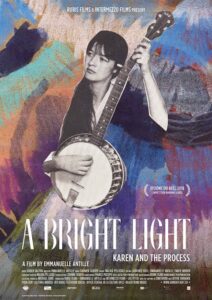 The closest point of comparison for this film is Nathalie Léger’s brilliant little book Suite for Barbara Loden, which traces French writer Léger’s attempt to unpack and understand the great miracle of Loden’s American masterpiece, Wanda (1970). Similarly, Swiss director Emmanuelle Antille hits the road in America—from Colorado to Louisiana to Indiana and finally to New York—to get closer to the voice and spirit of the ethereal folk blues singer Karen Dalton, a neglected American genius who thrived briefly in the ’60s and ’70s and died alone in a trailer in Woodstock of AIDS-related illness in the early ’90s at age fifty-five.
I first heard Karen Dalton over twenty years ago and was blown away. Her voice wrecked me and got deep into my blood. For a long while, all I knew was that she’d been averse to fame; but there was very little available about her life story outside of some liner notes and magazine pieces I’d read as her music got reissued and rediscovered. Hers was an existence of fragments and sketches. In 2020, in the throes of the COVID-19 era, when many movies got lost or buried, Richard Peete and Robert Yapkowitz’s documentary Karen Dalton: In My Own Time was released—it was strong, if somewhat conventional. Antille’s film precedes it by two years and is much more interesting in its approach not only to painting a portrait of Dalton but to investigating the very nature of obsession and artistic creation. Like Léger’s Loden book, it is inventive and iconoclastic.
I realize such an approach is not for everyone; I think many people desire formula and convention in music docs. They want the expected footage and the notable talking heads and (this decade, anyway) those fucking ridiculous animated sequences that seem to have become mandatory. Anything that goes against the grain of this method can feel self-indulgent, off-putting, or irrelevant. I’m certainly not suggesting that simply going against the grain is enough, but when you do it with the heart and vision that Antille does here, the reward vastly outweighs the risk. The world can be tough on an artist who feels things so acutely—Antille, being that sort of artist herself, yearns to feel the way Dalton existed in the world.
Scour the negative reviews of this film and you’ll see people complaining about unnecessary shots of the crew or about how it’s not an “actual” documentary. I, on the other hand, was staggered by how necessary everything in it is. An “actual” (read: formulaic) music doc might rely on an abundance of still photos or B-roll; Antille finds her expression elsewhere. It’s right to say that it’s not merely about Dalton but equally about Antille’s quest to see Dalton and to see as Dalton, just as Léger’s book centers the search itself. I found it all profoundly moving and beautiful. There’s a moment when Antille (or is it one of her crew members?—the image is somewhat blurry) holds up a microphone to record the sounds of the Colorado mountains where Dalton once lived, attempting to capture the harmonies of the place, that could be perceived as pretentious filler but is instead deeply sincere and haunting. Antille is full of curiosity. She asks questions to Dalton throughout; again, they’re not performative but earnest. What, after all, is this world all about? Who better to ask than the ghost of Karen Dalton? There’s a tenderhearted urgency to what Antille is doing.
During a brief interview, Dalton’s friend Harry Tuft refers to her as “clumsy graceful.” He continues: “Her grace came through the music and through playing.” I think that’s maybe the goal for all great art, and Antille’s doc could also be described in such terms. When Antille and her crew build a model of Dalton’s Colorado cottage out of cardboard and foil or when they don animal masks, it’s a form of imaginative play, an attempt to connect with the process of creation, the core of the creator. Let your expectations fall away and ride along with Antille on a winding road full of dead ends, detours, and illumination.
Traces of Glory: The Musical Journey of IDAHO, directed by Mark Allen Davis (2022)
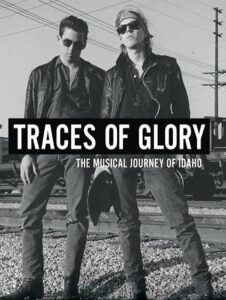 I wish I had some memorable, romantic story about how I discovered the Los Angeles band IDAHO. I wish I could say that, like so many of my best discoveries, I was in college at SUNY New Paltz in New York’s Hudson Valley back in the late ’90s and found an IDAHO CD on an employee recommendation shelf at Rhino Records or Jack’s Rhythms, where I spent so much time in those days. Or I wish I could say I first heard an IDAHO album in a listening booth at Thirty-Three Degrees when I moved to Austin in 2001, or that a friend put “The Thick and the Thin” or “To Be the One” on a mixtape for me. Most of my musical discoveries came via such channels.
Instead, even though the music IDAHO makes is right up my alley, I missed them for a very long time and only stumbled across them finally in early 2026 in the least romantic way imaginable: on Apple Music, under the You Might Also Like header. It was their 2000 album Hearts of Palm that I listened to, and I just kept scratching my head, saying, “How do I not know this band? How do I not love this band already?” I messaged friends who are more knowledgeable about music, expecting responses like, “Oh yeah, IDAHO’s great. I can’t believe you don’t know them.” But they were also in the dark. I went back to IDAHO’s earlier albums and EPs—The Palms, Year After Year, This Way Out, The Bayonet, Three Sheets to the Wind, The Forbidden, Alas—and was summarily knocked out.¹ The confusion heightened. How, for thirty-three motherfucking years, did I miss this incredible band?
But regret over somehow missing IDAHO is a refrain that seems to echo across the last several decades. Traces of Glory: The Musical Journey of IDAHO begins with a brief overview of similar reactions from music journalists and fans. Finding an artist or band you love later in life is certainly preferable to not finding them at all; nevertheless, there is a certain level of melancholy that comes with it. In that way, the documentary considers the very nature of fandom: What does it mean to tie your identity so fully to art that you love? The longtime IDAHO fans that are interviewed or mentioned throughout are deeply protective—there’s an intimacy to how they’ve loved the band that probably can’t ever exist in quite the same way for an act with wider reach and more mainstream appeal. The band is and has been theirs. That’s where the melancholy comes in. I, for one, wish like hell I could count myself among their numbers, wish I could say I was there from the beginning. Alas, certain rooms you enter only when your hair has gone gray and you’re thinking persistently about lost youth and death and the ragged drift of life.
Jeff Martin and John K. Berry, high school friends who’d been playing in various projects and bands together since the early 1980s, formed IDAHO and signed to Caroline Records in late 1992. If you haven’t heard them and are trying to grasp their sound, they’ve earned comparisons to Red House Painters, Codeine, Swans, and Low (Alan Sparhawk is interviewed in the film). But it does them a grave disservice to simply find points of comparison. IDAHO is pure. Sparhawk praises their “draggy beats,” the feedback looping in and out, and Martin’s “large” voice. Martin and Berry had a tumultuous relationship—the magic of the initial IDAHO outings is rooted in the balance between them. They split early. Berry went down a darker path of addiction, while Martin continued to record and tour under the IDAHO banner. Traces of Glory tells the story of a band that has always prioritized authentic expression. At one point, Marty Brumbach (who produced the first few Idaho albums) reminisces about how he was drawn in by the band’s “commitment to following a path that wasn’t laid out.” Though Martin continues to make music as IDAHO, the project remains very rooted in the ’90s aesthetically and philosophically. They never sold out. They never chased fame at the expense of their vision or tried to fit a formula. The documentary features excerpts from music journalists who are continually mystified by the band’s “chronic lack of success.” When they did finally break on a larger scale in the early 2000s, it was in Europe. They made the music they wanted to make. They were there. It was—and remains—our job to find them.
While this documentary is much more traditional and conventional in its structures and rhythms than Antille’s, it thankfully doesn’t succumb to the genre’s worst instincts. It centers the music and is chock-full of gorgeous, sometimes grainy footage of the band performing onstage and in the studio and being out on the road. The talking-head interviews are illuminating. Most impressively, it never spoon-feeds the audience (another bad tendency in many contemporary music docs that rely on too much exposition); instead, it simply launches you into the narrative of the band and allows you to get your bearings, assuming that you either know the players or are smart enough to figure things out. As a deeply important source of enlightenment about this cult band, Traces of Glory: The Musical Journey of IDAHO is essential viewing.
Garland Jeffreys: The King of In Between, directed by Claire Jeffreys (2023)
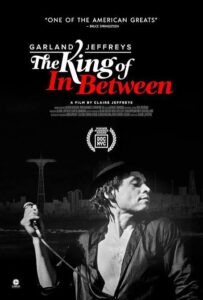 To my great shame,² I was also a little late to the forever underrated Garland Jeffreys; I didn’t start listening to him until the early 2000s when I saw Lou Reed mention him somewhere. I’d been seriously into Reed since my best pal turned me onto the Velvet Underground my sophomore year of high school in 1994; Reed and Jeffreys attended Syracuse University together, and Reed often had Jeffreys as an opening act and was never shy about praising his work. My lack of knowledge about Jeffreys felt particularly egregious since I was a Brooklyn kid and Jeffreys is, in many ways, one of the penultimate Brooklyn musical artists. I blamed others: No one told me about him. I’d never encountered his name in the music magazines I subscribed to. I’d never seen his records at the shops I frequented. Maybe I’d been looking in the wrong places. In any case, discovering Jeffreys was truly revelatory. Is there any song that captures the feeling of the city more than “New York Skyline”? His voice comes so distinctly from the place; it is the place.
Garland Jeffreys: The King of In Between is directed by Claire Jeffreys, Garland’s partner of many years, and it is a deeply intimate and joyous portrait of this true American original. It features interviews with Bruce Springsteen, Harvey Keitel, Laurie Anderson, Alejandro Escovedo, Vernon Reid, Roger Guenveur Smith, and Jamaica Kincaid—great artists who have long known and admired Jeffreys and yearn to see him get his due. Springsteen ranks him among our greatest songwriters, alongside Bob Dylan and Neil Young.
One of the most moving things about the documentary is how it tangles with the question of success. It seems as if, for a long time, Jeffreys was disappointed by coming so close to superstardom and missing. The critical raves were there, as was the devoted audience, but he never broke through on the scale he’d hoped. In the end, though, he’s happy and content. Jeffreys has remained uncompromising throughout his career, always chasing his own vision, never yielding to trends, exploring the subject of race in America in complex and personal ways. He has made a body of work he’s proud of. He has built a beautiful life with Claire and their daughter, Savannah. Success, he knows, isn’t and shouldn’t be measured by money. Whether you’re a longtime fan of Jeffreys or just beginning to listen to his music, this documentary is an act of love and grace.
¹ I haven’t dug into their twenty-first-century output much yet.
² I was raised Catholic. I thrive on shame.
William Boyle is the author of nine books. His most recent novel is Saint of the Narrows Street. His next, Heavy Sugar, will be released in January 2027. He coedited (with Claudia Piñeiro and Frances Riddle) the Southwest Review noir issue (volume 108, number 3).
