The Guest List is a regular book column that surveys the reading habits of our favorite musicians. In this edition, David Swider talks with the Nashville guitarist and composer William Tyler.
David Swider: So what are you reading right now?
 William Tyler: I am reading The Railway Journey by Wolfgang Schivelbusch. He’s a German historian. The book is about the history of the early railroad, which is fascinating. From the late eighteenth century and into the nineteenth. The main thesis of the book is that railroads were one of the major things that shifted human concepts of space and time. Because they could move people through space and time very rapidly in a way that they hadn’t been able to before. And the pushback against them was remarkably modern—similar to the way we’re concerned about AI, people were concerned about horses. People were saying things like, “We can talk to horses; they have feelings. We can’t talk to machines.” So not much has changed.
I’m surprised his books aren’t more popular. He picks great topics; he also has a book about the history of spices. I love history books like that.
DS: How did you find out about him?
WT: I read a book of his a long time ago called The Culture of Defeat. It’s a sociological examination of societies that lose wars.
DS: He reminds me of William T. Vollmann. Little less in the weeds maybe.
WT: Yes, very much in Vollmann territory. He’s just a little less wordy. I’ve read a couple of Vollmann’s books.
DS: I was fascinated that Vollmann did that history of violence [Rising Up and Rising Down]. It was eight volumes [seven unabridged and one abridged]—I think it’s a thousand dollars if you can even find it.
WT: If I had five lifetimes, that would be on my bucket list. Right now, Proust is on my bucket list. I didn’t go to college. So there’s a lot of stuff I didn’t read. Now I’m catching up.
DS: I know you’re an avid reader. You post stuff online, and it seems you’re a big history buff. What draws you to a good history book? Why not a bestselling novel?
WT: History is endlessly fascinating to me. As a humanist who is also disgusted with human beings a lot of the time, I’m interested in how things have changed, what was behind those changes, what the results were, what people said about events then versus now. History helps me understand human nature.
I’ve always been obsessed with history. When I was a kid, I was obsessed with the Civil War. In high school, if there was an elective, I would take history. It’s what I thought I wanted to study in college before I decided not to.
What draws me now is macrohistory—I’m not interested in biographies. I like prismatic books, even if they’re about a few people, like The Warmth of Other Suns, Isabel Wilkerson’s book about the Great Migration. That’s six biographies in one book. But my attention span is weirdly long and also erratic. I don’t tackle the two-thousand-page books about D-Day.
DS: You don’t care about names and dates as much?
WT: I used to care about military history as a kid. As soon as I was draft age—and Saving Private Ryan came out—I realized war looks like a camping trip where everybody’s trying to kill you.
DS: Have you read all three volumes of Shelby Foote?
WT: No. I read the first one a long time ago.
DS: Is there a Civil War book that you like?
WT: The Battle Cry of Freedom by James M. McPherson is the best single-volume one.
DS: I’m the kind of reader who finishes a book and quickly moves on. Do you ruminate on a book before you move on?
WT: I move on immediately. I try to alternate fiction and nonfiction. The last thing I finished was a collection of Daphne du Maurier’s short stories, Don’t Look Now.
DS: I love that. I just read three New York Review Books releases back-to-back.
WT: I’ll buy anything they put out.
DS: I read a review in this magazine about the reissue of Nancy Lemann’s books. Do you know her?
WT: I don’t know her.
DS: She wrote a book called Lives of the Saints, set in New Orleans. It’s genius. I read it in two sittings. Speaking of history books, she also wrote a nonfiction book called The Ritz of the Bayou about a famous trial in New Orleans. It, too, was reissued in a fortieth-anniversary edition; it’s on my bedside table. What’s a book you read when you were young that stuck with you?
 WT: The Wind in the Willows by Kenneth Grahame. Then there’s a book I read in high school called Rites of Spring by Modris Eksteins. It’s one I recommend to everyone. He flips back and forth between the premiere of the Rite of Spring ballet before World War I, and then he gets deep into the psychology of trench warfare, Dadaism, and surrealism. Then he looks at how modern media figures like Charles Lindbergh and Hitler rose to power through radio and film. It ends with the rise of Hitler. It’s a book I’ve bought five or six times and keep giving away.
DS: I haven’t read it, but now I’m going to get a copy. Any other books from high school that lingered with you?
WT: There’s a book called The Black Jacobins, a Marxist history of the Haitian Revolution by C. L. R. James. It was recommended to me by Alex Chilton.
DS: I don’t ever think I’ve ever heard about him recommending books.
WT: He and I shared this not-technically-educated-history-buff thing. He was friends with my parents. He didn’t want to talk about guitars, but if you were into history, he was great to talk with. Another person I bonded over this with was Marisa Anderson. She’s also a big history buff.
DS: I just saw her in Memphis for The Anthology of UnAmerican Folk Music, and she set up each song before she played it by articulating the history of the song and how she then made it her own. It was incredible.
WT: She’s really special. She has a curious mind about history, time, place, and geography.
DS: I know touring is unglamorous and can be a drag, but one thing I love to do before a trip is plan what books I’m going to take. What are your reading habits on tour like?
WT: I was a voracious reader on tour in my twenties and thirties. When I was playing with other people and not driving, I’d read two books a week. Touring with Silver Jews, David [Berman] and I were the only two people who brought a whole suitcase of books. I remember bringing a soft suitcase with twenty books for a seven-week tour. Everybody in Lambchop seemed to read books; that’s rare.
DS: Do you yearn for those days of sitting in the back of the van reading twenty books?
WT: Absolutely. I would love to be a sideman again just so I didn’t have to drive and could read books.
DS: Do any books from those tours stand out for you?
WT: I got interested in linguistics about twenty years ago. There’s a book called Through the Language Glass by Guy Deutscher. It’s a sociological history of linguistics, about how language shapes the way people think. I remember that book being passed around the van. We also all read The Road on a Lambchop tour.
DS: The most depressing book ever written.
WT: But you can read it so fast. We all just crushed Cormac McCarthy. Whoever had it would be late for sound check, and when they would show up, they just looked gray.
DS: Do you read a lot of books about music?
WT: Not a lot now. Revolution in the Head by Ian MacDonald is definitely the best Beatles book. It goes song by song through their catalog. As Serious as Your Life by Val Wilmer is a great book about the revolutionary aspects of free jazz. Blues People by Amiri Baraka is one of the best music books I’ve ever read.
DS: Do you find books influencing your music?
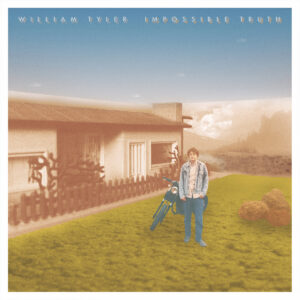
WT: Books and movies are the things I reference the most. Modern Country was a concept album about a declining America. It came out in 2016, six months before the election. The book that inspired the energy of that album was The Unwinding by George Packer. [My album] Impossible Truth has specific references to Marc Reisner’s Cadillac Desert, which is about the history of water in the West.
DS: Would you say you read for joy?
 WT: Absolutely. But I’m not sure I should have spent as much time self-educating about crony capitalism and global warming. I knew all about this twenty years ago, and now that it’s all falling apart, it doesn’t feel better to understand it.
I read a great book that skewered AI, More Everything Forever [by Adam Becker]. Anything Naomi Klein writes, I’ll read. Doppelganger was genius and spot-on. It felt like I was in a master class.
DS: What’s the last really good book you read?
WT: Greg Grandin’s America, América. He won the Pulitzer for another one of his books, The End of the Myth. This one [America, América] is a sweeping history of the relationship between Latin America and Anglo America. The American Revolution was modern, but limited, while Latin American revolutions were more egalitarian and there was a strain of populism in Latin America that the US supported before the Cold War.
DS: On my nightstand, I’ve got the new Frank Stanford bio by James McWilliams. It’s a thousand pages. What book is on your shelf is coming up next?
WT: He didn’t live long enough to have a thousand-page book written about him!
DS: I know, it’s insane. But his poetry is amazing.
WT: That’s another Berman one; he was on to Stanford before he was in the popular milieu.
Next for me—I want to read some fiction. A couple of years ago, I became obsessed with Melville after reading all his short stories, so now I want to reread Moby Dick. Also Breece D’J Pancake. I lost a volume of his short stories in a flood about twenty years ago and never bought it again. That’s the next thing I’m going to read.
David Swider is the owner of the End of All Music, a record store with locations in Oxford and Jackson, Mississippi. He hosts the weekly New New Soft Shoe Show on Memphis freeform radio station WYXR. He lives in Memphis, Tennessee.
William Tyler is a guitar player and composer living in Nashville. His solo career spans seven albums, including Modern Country, Impossible Truth, Goes West, and most recently, Time Indefinite. Tyler was also a member of Silver Jews and Lambchop.
Photo: Angelina Castillo
