Cracking the Code of Female Loneliness
I’ve been amused by recent reports of the deciphering of the fourth message embedded in the artist Jim Sanborn’s encrypted sculpture Kryptos, which has been on display at the CIA headquarters since 1990. Three of its messages have already been solved using complex cryptographic techniques. The fourth and possibly final code was cracked by the writers Jarett Kobek and Richard Byrne. Far from bumbling onto the solution, they uncovered the code, which most everyone else had overlooked, in a text that was perhaps accidentally discarded in the Smithsonian archives. After Kobek and Byrne’s discovery, they were subjected to merciless attacks on their motives, their qualifications, and their method of completing Sanborn’s puzzle piece. Much of the outrage was triggered by the fact that Kobek and Byrne are, after all, primarily writers! Who are they to solve what far more qualified cryptographers had not?!
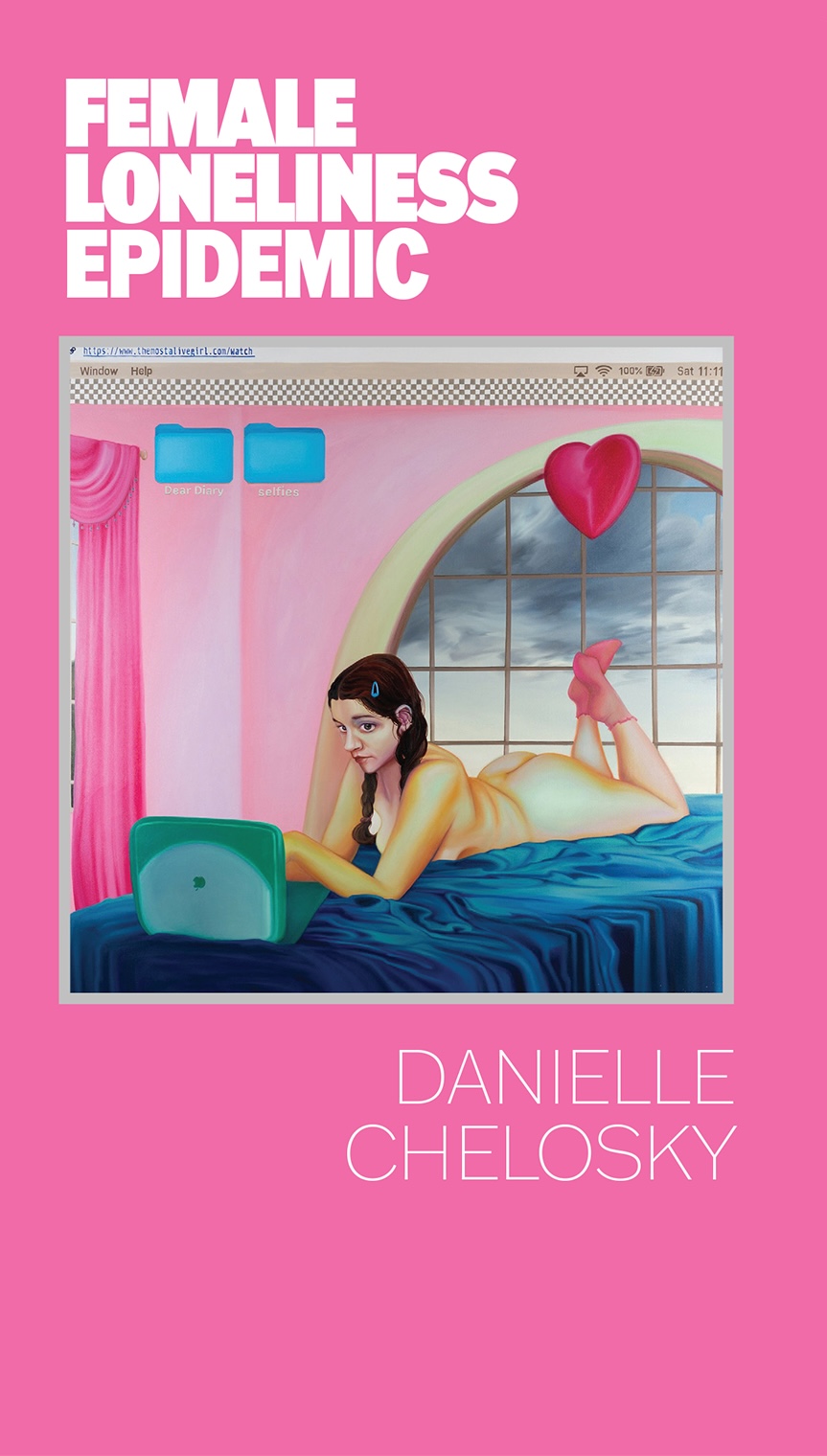
Reading Danielle Chelosky’s Female Loneliness Epidemic (Far West, 2025) reminds me of this imbroglio. Each tight story of this eighty-seven-page paperback, told from the perspective of a young woman in New York, contains an echolocation of her adventure with a guy, or her fantasy of one. In “Doe Dislocated,” the narrator muses:
I thought I would probably never find love in a place as ugly as America but I didn’t mind. It was true New York could be romantic. Yet the romance was not usually affiliated with love. The romance was about possibility. But there was simply too much possibility in New York that it was almost like there was none at all. No one fell in love with each other because there were too many people to pick from. No one succeeded in their career path because they didn’t know which one of their passions to pursue. No one got the jobs they wanted because the markets were oversaturated. Maybe the sense of possibility had been illusory all along.
Chelosky’s book impresses with the sense that we are being asked to pay careful attention to what is beneath the text, without resorting to any fancy analytics or sweeping generalizations about what she expresses concerning the female experience writ large. By cocooning her intentions within distancing language, Chelosky achieves an effect that feels both urgent and lackadaisical. She delivers an accurate reportage of a narrator in the moment when she searches out of despair, without knowing she is in despair. As she says of one man, “I didn’t want him to think of me as a whore but I wanted him to fuck me like one.”
In the short story “Bad Behavior,” the narrator uses Mary Gaitskill’s book Bad Behavior to block the sun as she observes, “I was thinking that women who wrote like this today were immediately dismissed as another disaffected nymph cosplaying as a writer.” In the next paragraph she is aware of her vulnerable position above a cliff drop, after one of the men nearby perhaps makes a comment about her being part of the scenery that he didn’t mind. There would be no witnesses; she could be a stone kicked into the water on the jagged rocks below. She puts herself in this position—it’s another Wednesday.
Chelosky’s narrators are mostly on the receiving end of violence, abandonment, and extreme humiliation, while drinking and using whatever else with the careless edge of someone reeling over a cliff drop. But there is no asking for pity. Nor is this transgressive writing for deadened sensibilities. Chelosky’s not going for shock value—the tenderness of the bruises is too visible. The emotion of the experience is cumulative; unlike Gaitskill’s fiction, there is no granular unpacking of what this all might mean. Chelosky is not cosplaying. She may well be a disaffected writer, but if you call her a nymph for seeking fulfillment with the wrong random guy, you’re of a different generation. Finding guys to be with is not the concern, but rather the isolation and loneliness of being with them, which cannot compete with the stories and fantasies of what these encounters should be and never will.
An attempt to deflect pain is made, but seep through it does. Chelosky would never deign to apply the term that is now being used when a latte is served with the wrong plant milk in it. She understands that trauma is for the reader to decode, because we’ve all been through COVID, and we all understand that the useable, attractive female body, in the realm of the socials as well as IRL, is transactional. We are all narcissists; it’s just a matter of degree.
Kryptos was solved by artists who found what had been left behind and who were well read enough in that story’s language to decode the puzzle. Reading Chelosky is like standing in front of Kryptos, you are being challenged to crack a code. But her code is visible between the lines, not in the text. You can read the book and simply take in all of its surface, but it’s much more powerful if you attempt to decode it. And if I were going to posit a codebreaker, it might be found in the last paragraph on the last page, in a story aptly named “Terror.”
Laura Albert’s latest book, a memoir of her life, is now being readied for publication by The Clegg Agency. She has already won international acclaim for her fiction. Writing as JT LeRoy, she is the author of the best-selling novels Sarah and The Heart Is Deceitful Above All Things and the novella Harold’s End. She is the subject of Jeff Feuerzeig’s feature documentary Author: The JT LeRoy Story and Lynn Hershman Leeson’s film The Ballad of JT LeRoy. She has written for the New York Times, Vogue, Interview, and others. A writer for the HBO series Deadwood, she also wrote the original script for Gus Van Sant’s Elephant and was the film’s associate producer. She has spoken extensively and lectured about gender-variance and transgender issues for such sources as BOMB Magazine, Ireland’s Mindfield Literary Stage, dot429, the Utah Valley University Transgression Symposium, and others.

More Reviews