Fear and Love Are like Two Fires
At the beginning of Loop, Annie McDermott’s 2019 English-language translation of Cuaderno ideal (2014), by Mexican author Brenda Lozano, the narrator relates an anecdote about a friend who kicks the pavement after discovering his car got double-parked while he was attending a funeral. The next paragraph asks, “Are there ninety thousand pavements to kick throughout the length and breadth of the country?” The payoff for this seemingly abstract number doesn’t come until the novel’s penultimate chapter, when the narrator hears a woman on the radio talking about the unsolved murder of her fifteen-year-old daughter: “Who’s going to give us an explanation? Will my daughter Renata’s killer go unpunished? Will the more than ninety thousand recorded deaths in recent years go unpunished?” The grieving mother’s appeal ends with her saying that “losing a child is the most painful thing there is, more painful even than our own death because we wish we’d been taken in their place.”
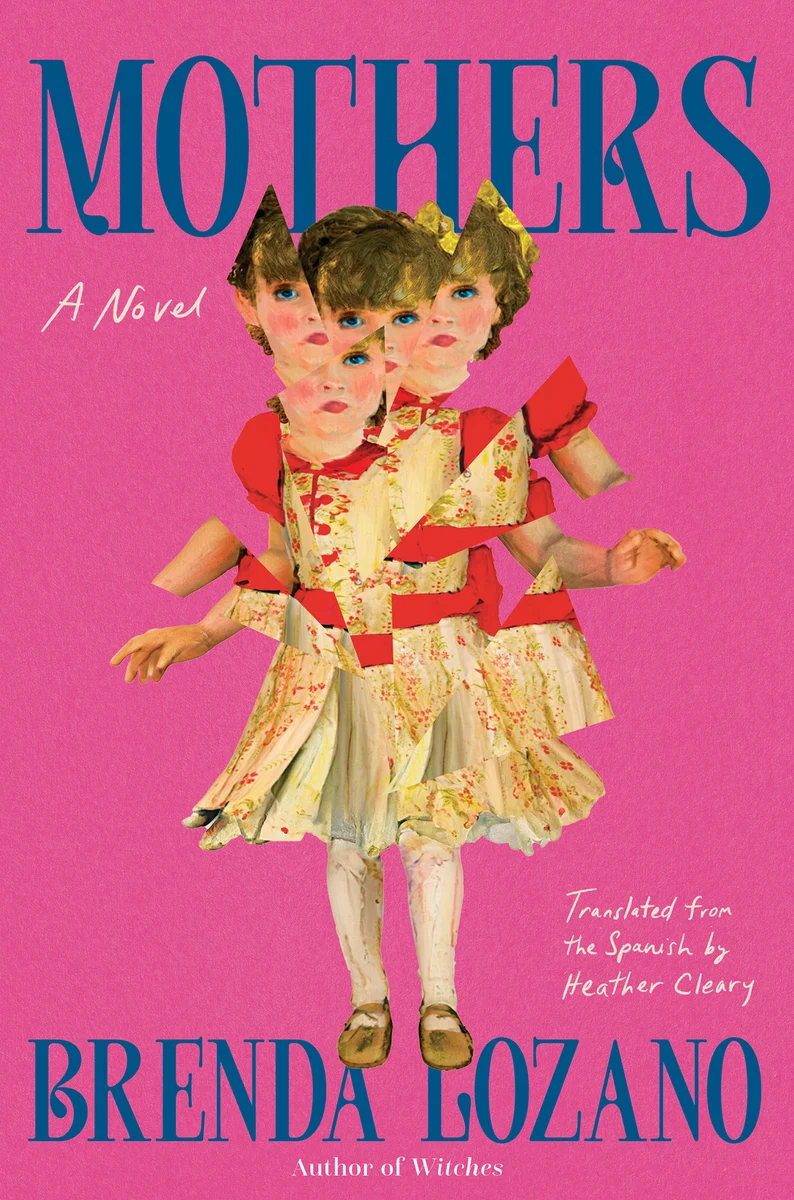
The passage is a bit of a non sequitur in that it’s the only instance in the discursive novel when a voice belonging to someone who is not one of the narrator’s friends or family members speaks so extensively; it flips the script in a story that is animated by its exploration of children who have lost mothers, rather than mothers who have lost children. Appearing at the end of the novel, it almost feels like an idea Lozano jotted down in her cuaderno with the intention of revisiting. Ten years later, she did just that in Soñar como sueñan los árboles, which returns to the theme of mothers who lose their children with an unflinching righteousness. The gorgeously evocative title, which literally means “Dream like the trees dream,” comes from a poem by Danish poet Inger Christensen that is excerpted as an epigraph, yet Heather Cleary’s engrossing new English-language translation of the novel has been given the inert if undeniably apt title Mothers. (This choice is surely intended to recall 2023’s Witches, Cleary’s lauded translation of Lozano’s Brujas [2020], and while I’m sympathetic to the challenges facing the publishing industry, I don’t know that the solution to a shrinking or hesitant readership is monotonous mononyms.)
Mothers is Lozano’s most propulsive novel, a thriller with a social consciousness that takes an unapologetically feminist look at the pleasures, pressures, and terrors of motherhood in a patriarchal society beholden to money and access. Set in Mexico City, the novel begins with twined narratives: one that tells the story of two-year-old Gloria Miranda Felipe’s kidnapping in January 1946 and one that shows the kidnapping’s affect on the broader population. The former focuses on Gloria’s family—specifically, her mother, Gloria Felipe—while the latter tracks Nuria Valencia and her husband, Martín, who have newly become parents via adoption. Little Gloria, who is snatched from the courtyard where her mother left her to play, is but the latest victim in a “wave of kidnappings” plaguing Mexico at the time, though her case becomes so high profile that parents like Nuria are terrified to let their children go outside.
While the Miranda Felipe family’s privilege couldn’t prevent their daughter from being taken, it does guarantee that her case is not cast aside or quickly forgotten like the other eleven cases the overstretched police force are investigating—a number that is just a fraction of the fifty-four disappearances being looked into by a parental group. Police Captain Rubén Darío Hernández and journalist José Córdova are convinced to focus on the case full time, thanks largely to the resources of Gloria Felipe’s mother, Ana María Felipe, a renowned, trailblazing designer with an international clientele. As the months tick away and a succession of callers demanding an ever-escalating ransom fail to pan out, the strain begins to damage Gloria and Gustavo’s marriage and their relationship with their kids, as when the five-year-old Carlos tells his mom, “I want to be kidnapped so you’ll pay attention to me.”
The lives of Gloria Felipe and Nuria contrast in almost every way. The Miranda Felipes are wealthy and fortunate, having five children (four boys and “little Gloria”) in the dozen years they have been married, children whose rearing has been made easier by “a domestic worker—who back then would have been called a maid” named Consuelo, who was forced to choose employment over her own daughter, left behind in Tlalpujahua de Rayón, about a hundred miles northwest of the capital. Nuria and Martín spent years trying to get pregnant, until eventually a series of doctors—“all of whom were men over the age of fifty”—told her she was sterile, leading her to undergo an excruciating battery of “gas therapy” sessions that made her vomit, lose consciousness, and suffer migraines, but not get pregnant.
Despite the initial structural similarities with Witches—“they are not two stories but one”—Mothers is driven by continuous chronological plot developments. The backstories of Gloria’s and Nuria’s lives and families are fleshed out to enhance that tense external narrative rather than to replace it, as was the case in Witches, where Feliciana and Zoe have what amounts to a book-length conversation. The first two-thirds of Mothers is related by a sassy outsider who conveys information of unknown provenance, prefaced by the disclaimer “We hear this is what happened.” This narrator is more straightforward about her own bona fides, however, saying, “I’m not a third-person know-it-all who controls the story, the voice of a white male saying this is like this and that is like that.” She is a Mexican woman whose “words dance the jarabe tapatío.” She knows her “way around a ranchera” like Consuelo does. And she occasionally breaks the fourth wall to mention that she is hungry, say, or to editorialize, as with her qualification about single mothers: “What can you do, that’s what they’re called, as if being a mother were a marital status.”
This type of indignation over societal double standards simmers below the surface of the entire novel, even after the narrator steps aside in the latter third of the book to allow for some more informed testimonials upending everything that has come before. Mothers calls into question the labyrinthine bureaucratic adoption system, the dismissive attitude the police and press evince toward the poor, and the many abuses and biases of Mexico’s prison system. Intertwining with these critiques is a drumbeat of charges against male dominance in society and the numerous problems it enables. Gustavo and Martín both love being fathers and are generally good at it, but the men of this world are still almost inherently flawed in the ways so many men were in 1946 and far too many remain today. Some of these shortcomings are mentioned as asides, such as the police officer who is “uncomfortable to be giving another man flowers” or the fact that Gustavo usually has trouble “communicating his emotions.” And some are defects baked into the system, such as the children’s stories Nuria reads to Agustina, ones “written by ‘international’ authors, all of whom were white European men with narrators made in their image.” When Nuria and Martín are trying to get pregnant, they often have to pay for the doctors out of pocket—“Gynecology, like so many subjects related to women, was of little interest and therefore not covered by insurance because medicine was and continues to be focused on the male body.”
These feminist themes are epitomized in the biography of Ana María Felipe, Gloria’s mother. Despite growing up in a world where “a woman’s highest aspiration was to become a housewife, full stop,” she started her own business and grew it into a world-famous entity. Equally rare, she stood up for herself against her former husband, a “Spaniard whose name we will not speak” (a promise made and kept a dozen times in the novel) who beat her and locked her in a storage room, where she had a miscarriage. Ana María hires women only, particularly those who have found themselves single or who need a way out of abusive relationships. Gloria, despite her mother’s success, was ashamed of growing up with “the stigma” of having a divorced mother who worked for a living, “an unthinkable combination at the time.” Ana María’s resources aren’t “infinite,” but they are “limitless” when it comes to trying to find her granddaughter; in addition to bribing cops and journalists, she continually increases the promised reward.
Ana María also goes to see a bruja, or witch, called La Jefa, to make sure that she pursues every available option. The scene between the two demonstrates Cleary’s biggest strength as a translator in the way she skillfully uses tone and diction to distinguish different voices—something that garnered deserved praise for Witches, too. These distinctions begin with Lozano, of course, who has La Jefa pepper her speech with the affectionate term of address mija, but Cleary wisely chooses to leave that term untranslated, which grounds the reader in the bruja’s character every bit as much as her tarot deck does: “You can’t save the whole world, mija, because first you have to save your world, that’s what the cards say, that’s what they say right here, God as my witness.” Later in the novel, Cleary does the same thing with other characters, one of whom intersperses their speech with “young man” (“If I dished all the dish I know, you’d have a book right there, young man, fatter than the Bible and all of it juicy.”) and another who uses “sir” (“I spent my mornings there, sir. Yes, that’s how it was. I’m telling you the truth, sir.”) I would have liked to see the latter remain untranslated as well, given the ubiquity of the word señor.
Lozano makes powerful use of rhetorical questions, unspooling them in paragraph-size blocks that help the reader see inside her characters. Nuria wonders whether she is “incomplete,” is “somehow defective,” or has “something missing” because she can’t get pregnant. “Where did the idea come from that your children are your children only if they share your blood?” Gloria wonders what would happen if they don’t find her daughter, of if they did and she “wasn’t alive”—“they didn’t dare say the word dead.” What “would they do with the guilt” if little Gloria was never found? “And what would become of her as a mother if someone had sexually abused her little girl?” At one point, Lozano even equates the societal fear due to the kidnappings with the lockdowns caused by COVID. Cleary uses the word pandemic to refer to Nuria’s fear—“as if they were living in a pandemic that threatened their lives each time they stepped outside”—and soon after, the narrator wonders, “What effect would being shut in like this have on young people later in life?” And again: whether children were being “developmentally curtailed by not being allowed outside, sometimes not even to go to school, because of this public safety crisis.”
The novel’s almost compassionate conclusion surprised me, which I think is indicative of something Lozano is explicitly critiquing in the book—namely, a vengeful, stereotypically “male” way of seeing the world. Gloria Felipe and Nuria’s stories are tied together in several ways I wouldn’t want to reveal, but I will highlight a beautiful, illuminating simile that Lozano uses near the middle of the book: “Fear and love are not separate things; on the contrary, they’re like two fires. One doubles the other.” Cleary punctuates these sentiments perfectly, giving primacy to the concluding “One doubles the other.” This train of thought ends with a question from the narrator to the reader: “What should we do with that redoubled fire?” One answer is to make sure it burns in the correct location. And fiction like Mothers does exactly that, targeting those pillars of society that must be razed to the ground and built anew.
Cory Oldweiler is an itinerant writer who focuses on literature in translation. In 2022, he served on the long-list committee for the National Book Critics Circle’s inaugural Barrios Book in Translation Prize. His work has appeared in the Boston Globe, Star Tribune, Los Angeles Review of Books, Washington Post, and other publications.

More Reviews