In Dreams Begin Responsibilities
Unless your entire experience of literature came from an Intro to Creative Writing course taught by a football coach, you probably know by now that dream sequences in fiction are fine, totally normal, and not verboten. But just in case you don’t believe me, peruse any shelf of excellent to halfway competent novels, where you will find plenty of moments in which a character falls asleep and enters a subconscious vision that relates, in some way, to the deeper themes of the work itself. Of course, in the hands of lesser writers, these scenes can come across as clunky and obvious, which is why the myth of their being against the rules persists. If, for example, the only way you can communicate a character’s resentment of his more successful, older brother is a dream sequence in which the character must rescue that older brother from a gang of feral cats, then the story is failing elsewhere. Nevertheless, a dream properly conveyed remains one of the more potent instruments in every writer’s toolbox.
But a dream is not just a movie that plays while we’re asleep. Our dreams are with us in waking life as well. After all, what is a memory if not a dream of the past? Dreams of the future, or of alternate realities and roads not taken, take us away from the moment at hand and guide us toward what we really want. They encapsulate our hopes for a better life and for a better world—see, for example, the American Dream (or what’s left of it). A work of fiction may not simply contain descriptions of dreams: It is a dream itself—a “vivid, continuous dream,” in the words of John Gardner.
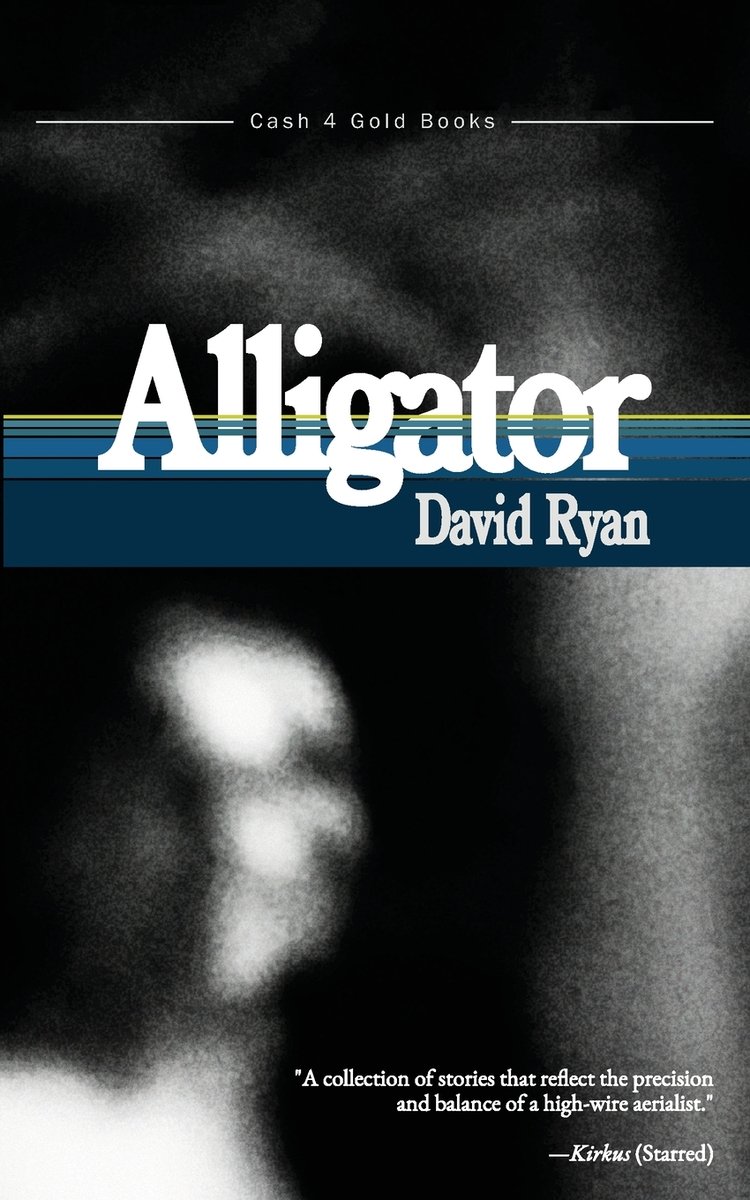
Alligator, David Ryan’s second book of stories, is preoccupied with dreams, whether as stylistic inspiration, plot device, or metaphor. In some of the stories, Ryan blurs the action to the point that the narrator, and thus the reader, struggles to determine whether what’s being described is meant to represent a dream or reality. Elsewhere, a character who believes he’s a cop, even though he isn’t, in one case, and in another, a character who believes he’s Jesus—spoiler alert: he’s not—attempt to manipulate events according to their own warped fantasies. Finally, we repeatedly encounter characters who are sleepy and on the cusp of that liminal state in which we so often seem to glimpse the kind of surprising truths that are out of reach when we’re fully awake.
Ryan is probably at his best when operating in the surreal is-this-a-dream mode. One shouldn’t put too much stock in how stories are ordered in a collection (after all, “The Dead” is the final story in Dubliners), but it’s likely not a coincidence that the first three stories here—the title story, “Black Box,” and “Warp and Weft”—are three of the strongest in the book. Each story uses a narrative voice that is somewhere between the now-you-see-it patois of a professional magician and the invocations of an ancient prophet. “Alligator” manages a bravura switcheroo in which the reader goes from the dread-inducing scene of an infant choking on an olive to the somehow not-frustrating revelation that the baby is a figment of the narrator’s imagination, just like the alligator he pretends to see lurching across his lawn: “No. This never happened. . . . Sometimes I lie to myself because it’s the only clarity I seem to have when confronted by some terror no method of thinking can fathom. Lying meaningfully to answer certain sublime questions.” The final pages of the story connect a sincere memory of encountering an alligator on a swamp tour to the narrator’s debilitating fear of losing someone he loves, and present such a brilliant and astonishing conclusion that I wanted to put down the book and break out in applause.
While “Alligator” and other stories in its vein take the dream, or the nightmare, as an implicit model, elsewhere Ryan approaches the subject more directly, either by invoking the mysterious power of dreams or by having his characters fall asleep and enter the dream state themselves. The brief and masterful “Pickpocket” is an example from the former category. The story follows the rapidly moving thoughts and memories of a woman watching Robert Bresson’s film of the same name. Childhood memories, familial grief, romantic regrets, philosophical musings, and attempts to understand the action on-screen collide in the stream-of-consciousness narrative. The protagonist’s attempt at interpreting Bresson’s film could be the thesis for Ryan’s book as a whole: “This movie is about sleepwalkers. Beautiful French sleepwalkers. We’re all sleepwalkers, it seems to be saying: but for these moments of grace when Death slips its hand inside us. Later we wake, reminded that we are still dreaming.”
When Death slips its hand inside us: If you have any doubts at this point that dreaming in Alligator is more than a motif and something closer to a singular obsession, consider that at least three different stories in the collection feature characters who end up killing themselves or others, either because they are too tired to give complete attention to what they are doing or because they fall asleep in a situation where doing so could be fatal. In “Warp and Weft,” a drowsy construction worker falls from a skyscraper after having spent a sleepless night with a newborn; as he falls, he dreams that every floor he passes represents a different moment from his life. In “Blueberry Season,” a man buying coffee at a grocery store looks back with horror on the moment he killed his daughter and his dog because he fell asleep behind the wheel of his car, dreaming of a cup of coffee. In “Three Dreams,” another man suffering from fatigue after his wife has just had a baby drowns when he drives his car into a lake. (The characters from this story reappear in a story called “Sleepwalker.”) Given the prior series of sleep-related deaths, readers will undoubtedly seize up when they encounter these lines from “Exposure,” which is about a wedding photographer whose wife is dying of cancer: “He was driving home from a wedding last week. It was pretty late and he was very tired, as he always was after jobs like these.” This character is lucky enough to survive the drive home, after hitting a literal bump in the road that may or not be an animal, although the story hardly severs the connection between dreaming and death. The photographer’s wife is subject to “rude” visions caused by chemotherapy drugs and dreams that she is walking through a burnt-out city. The scene epitomizes her fears about death and its ability to destroy “every single moment and person that had ever happened to you.”
One problem with Ryan’s thematic focus is that, in a few instances, it leads him to neglect the craft of storytelling. “Reach” contains a scene in which a swimmer finds a drowned woman floating just beneath the surface of the ocean. The corpse’s face sets off a reaction of resemblance and misidentification suggestive of how much our subconscious minds influence our vision of the world. The story is one of several in Alligator to connect the image of surfaces, and the things existing just beneath, with ideas of sleep, memory, and death. If you go digging beneath the topline of consciousness, these stories seem to say, beware of what you may find there. Yet Ryan stumbles in the final section of this story, which centers on the victim’s oblivious father, who is lying in bed next to his sleeping wife. The father’s memory of life before having children is cheapened by cliché and the dubious use of contemporary lingo: “They could make love on the living room floor for instance. They could drink all night if they wanted. Pick up and leave town for a weekend. He’d been a smoker. But they’d been twenty years younger, too, and their life energy, or whatever, was different.” The memory of how the father felt upon listening to an ultrasound of his daughter’s heartbeat is no more profound, as he imagines her future in terms that evoke an insurance commercial: “She’d go to college, maybe marry.” Unlike the collection’s title story, which translates the shocking image of an alligator stalking across a front yard into a more relatable but no less terrifying realization about loss, “Reach” fails to turn its auspicious opening into a similarly satisfying kicker.
Alligator is neither the greatest literary exploration of dreaming and its connection to death (that distinction belongs to Hamlet’s soliloquy) nor the first (see the reference to the twin brothers Sleep and Death in Book 16 of the Iliad), but that hardly means the collection lacks for originality or excitement. Read it late at night, and you will find yourself dreading the very sleep the book so hauntingly describes; read it on the beach, and you will sense the monsters of your subconscious circling in the watery depths. Like the best books, Alligator reminds us of the beauty and tragedy lurking beneath the surface of the everyday.
Wilson McBee lives in Highland Park, Illinois, and is currently at work on a novel.

More Reviews