The South Dies Every Day
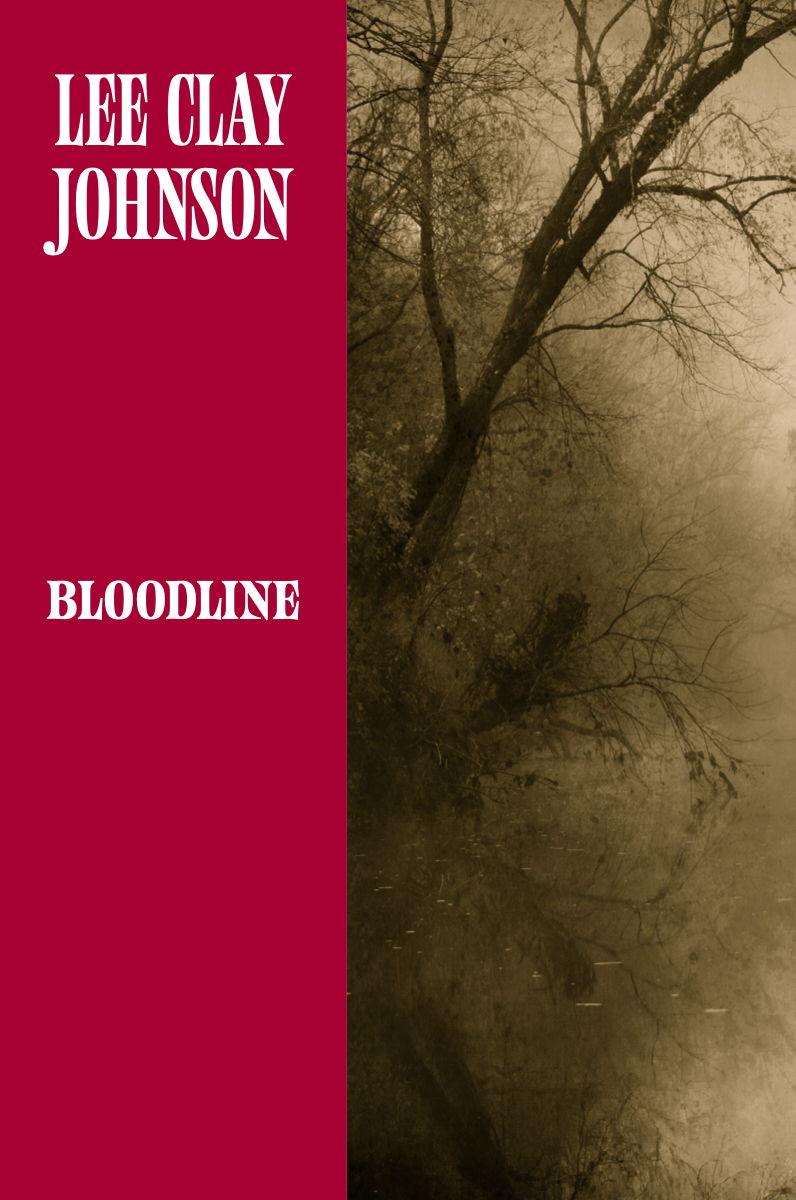
Lee Clay Johnson’s second novel, Bloodline, released in 2025 by Panamerica (the publishing arm of the newspaper County Highway), centers on Winston Alcorn, a grifter auctioneer transformed into a Lost Cause politician. Winston readily admits that he suffers from self-diagnosed “far-memory,” wherein historical events of consequence collide with everyday life, namely the Middle Tennessee exploits of Confederate General John Hunt Morgan. At an early age, Winston’s mother took him to the heroized bronze statue of Morgan atop his horse, Black Bess, on the town square, unspooling a narrative of descendancy for them. Though Winston finds little evidence of this lineage, he feels it “in his bones so deeply . . . he could hear hooves pounding down the street.” Whether Morgan’s relationship to the Alcorns is real or imagined is unimportant to Winston. What matters is that it gives Winston the power of self-creation, a mythology that grants his life the meaning and agency he would otherwise lack.
With Bloodline, Johnson casts a spell of characters on the fringes of society (whether that’s in the backwoods or somewhat closer to Lebanon and maybe even the larger Music City metro of Nashville) meeting nefarious and often brutal ends. The novel has some similarities to Southern Gothic writers like Padgett Powell and Barry Hannah: characters motivated by ill intentions, bludgeoned with moments of dark comedy. The novel is compelling in its audacity and the ease with which a con man like Winston can rise to power through such dangerous rhetoric, often mirroring much of contemporary politics.
In the novel’s opening pages, we find Winston unemployed for lifting a lockbox of cash at a used car lot in Kentucky. He soon loads up the car with his wife and young sons to return to the land he believes he’s owed, conning his way into a sawmill-operator job. It’s in these scenes that he admits to his young son that there “ain’t much opportunity in this world.” What might be better said of Winston is that he creates opportunity—or rather, chaos—soon thereafter by sawing his own hand off as part of a larger plan. Soon he’s whisked off to Nashville to have an amputation, followed by a waiting game of drug-induced months in an apartment with his wife and visits from a lawyer until the landowner, Miss Becka, eventually relents and signs over the land to Winston as reparation. This gives him the jumpstart to reinvent himself as “Wins-a-ton,” in the vein of a character like Larry “Lonesome” Rhodes from Elia Kazan’s film A Face in the Crowd, capable of manipulating an audience for profit. Winston’s initial auctioneering side hustle, with a bullhorn and a grotesque rubber hand in place of his stump, turns into an aspiring political career.
As the novel progresses a few years, we see Alcorns’ teenage sons, Dustin and James, sharing a decrepit house next to their parents’ newer mobile home on the property. They soon grow disillusioned with their father’s treatment of their mother and his business habits: makeshift flea markets selling everything from illegal guns to pieces of the sawmill itself to fuel his Dixie-loving ambitions at higher office. The boys, both of them kicked out of school, spend much of their time on the river that lines the edge of the property or at the local dive bar, the Bomb Shelter; both places become avenues for mobility throughout the story. Dustin will soon leave for the army to free himself of his father, while James ends up growing closer to his father’s supposed enemy, Miss Becka.
Miss Becka, formerly a Klan-protesting hippie activist in her university years, now shuffles through a series of part-time jobs to make ends meet after losing her land to Winston. She is one of the more complex characters in the book. Most days, she prefers to “do some fishing, then settle in with a pint glass of Rossi on ice. . . . Talk to herself a little bit. Wander around with her hair hanging down like a witch. Go out into the water and weep at the stars.” Miss Becka’s difficulties lie in caring for her nursing-home-bound father (who passed the sawmill and its land on to her) while watching Winston become a wealthy man and popular right-wing fixture. She sees Winston and his cronies fix up their family’s ferry, which he will eventually use as a means to further his political gains by broadcasting bootleg propaganda up and down the river through radio and rally stops (which also serve as impromptu flea markets).
Perhaps Miss Becka sees two younger women in the novel as having more opportunity than she currently has: Mandy, Winston’s wife, and Shelley, a young college student at nearby Cumberland University, who has who has subsequent flings—first with Winston’s elder son, then the younger. Miss Becka acts as an informal mentor for both women and tries to steer them away from the influence of Winston, whether that’s wading out on the river together for a fishing lesson or serving them as barkeep at the Bomb Shelter. While Mandy doesn’t want to return anything property-wise to the aging river matron, we do find that Miss Becka wishes to embolden Mandy’s cause of ridding herself of Winston and eventually getting the land out from under him (a plan that’s been in the making since his initial accident).
Shelley in turn looks to Miss Becka for advice related to her relationships with Winston’s sons, only grown more complicated since Dustin has departed for the army and Shelley moved into a rented apartment with younger brother James. Shelley sees that she can change either one or the other of Winston’s sons into something she finds productive, independent, or even just decent. There’s something about the Alcorn men that these women can’t seem to fully separate themselves from. Shelley even tells Miss Becka that her parents sent her to Cumberland because “they thought something like this wouldn’t happen here” (in reference to her relationships with James and Dustin, being drawn into the Alcorn orbit).
Most of the action comes to a dramatic point when Winston, bankrolled by the local Sons of Confederate Veterans and banished from his land, takes to the river on his reconstructed ferry with his prodigal, maimed, and dishonorably discharged son, Dustin, aboard. Winston reflects on this moment, remembering that “some prayers do get answered . . . but they come with a price tag.” It’s as though he knows that the grift can get him only so far before he must fully commit to the hateful dialogue disguised as “heritage.” It’s all been talk till now, but soon it will have real consequences on his life as well as the lives of his family. Winston and Dustin anchor down to hold a rally where they will place the statue of General Morgan atop the ferry like some sinister hood ornament in the name of cultural preservation (while perhaps charging admission for those wishing to view it up close). Without giving away spoilers of this final scene (which, admittedly, seems a bit rushed in its delivery), we find Miss Becka aiming to foil Winston’s plan, hearing his broadcasts and driving to the rally for one final confrontation.
It’s in this world, the outskirts of Nashville and Lebanon, that Lee Clay Johnson crafts a narrative that asks the reader not only to invest in the characters but to consider how much agency and blood matter, whether that blood is inherited or crafted. In an increasingly global economy, men like Winston grapple with their version of history, heritage, and an idealized way of life. As Johnson’s narration puts it, they must come to the conclusion that “the South dies every day.” Like a ghost army far off in the distant trees whose number grows ever thinner with the passage of time, what use are they if they can’t help but try and react, be it violent or abusive. The problematic side of it for the reader is what to do with these characters, the humanity of them, if there is even any of it left. The idea recalls an earlier image of James’s massive catfish pulled out of the river, which Winston executes point-blank with a pistol. It’s Dustin who tries to resurrect the fish, saying, “It can’t be killed because it doesn’t want to die.” In the end, Johnson leaves us wondering whether these spirits—be they men or monsters—cling to life out of hope, defiance, or the stubborn terror of a world that is ever shifting beneath their feet.
P. S. Dean is a Mississippi native who currently lives in California.

More Reviews