Track Premiere | The Paranoid Style’s “It’s a Dog’s Breakfast”
The bones roll. The dealer laughs. The junkie drifts off into their dreams. Another fraught night at Casino Nowhere. Imagine working there full-time? I guess, overall, the Rolling Stones’ “Tumbling Dice” is my favorite song. Over many decades, Mick Jagger manifested a cultural and musical juggernaut, essentially by insisting, year by year, that he was the most outrageous man alive. And he really did work at it: Mars bars and butterflies crushed on a wheel, the whimsical gym clothes of the ’81 tour, complications with heiresses, easy White House lawn lays, so much desperation unbecoming at certain points—but look at him now: still mincing, after all these years. And god, I love the Stones’ version. But let me tell you, if you don’t know, about Linda Ronstadt’s version, which is my favorite recording of my favorite song of all time.
Impossibly, it is sleazier than the Stones’. Ronstadt’s band of El Lay’s finest included Waddy Wachtel of Warren Zevon’s group and later recruited by Keith Richards for his X-Pensive Winos—his deeply greasy playing must have come as a kind of personal challenge to his future collaborator. On the original, Jagger’s vocal is fully into his defeated-exhausted-burlesque mode. The never-ending tent show thumps fulsomely behind him, always another thrill in the turnstile, but the tumbling dice metaphor accrues to the slurry-barely-holding-on circumstance of his own making. “Come on up now, come on up!” he will implore several songs later in “Shine a Light.” Because they are down in every way—artistically (Keith/heroin), karmically (Brian), financially (taxes). The whole Stones thing was a treacherous wager to begin with, but now the odds are telling you the end is nigh.
Why did Linda Ronstadt decide to cover this song? That’s not explained in her frequently revelatory autobiography Simple Dreams: A Musical Memoir. We are left to conjecture. In Simple Dreams, Ronstadt describes herself as “mostly a ballad singer”—meaning she felt uncomfortable singing rock songs—and indeed it is true: she might be the best American ballad singer since Billie Holiday. But the literal best thing in the world is when she sings rock songs— think “Hurt So Bad” or “Party Girl,” the mind-blazing cover of Elvis Costello’s vein-opening 1979 composition. About that, Dave Marsh wrote: “Linda Ronstadt has nothing to contribute to a genre steeped in transcendence and passion.” It’s a preposterous take and he sounds like a Hare Krishna.
So, Linda’s “Tumbling Dice.” Yes, the guitar is even more unctuous. Then she changes the lyrics, beginning with the first one. Mick sings: “Women think I’m tasty.” Which—fair. Linda sings, strangely nonchalantly: “People try and rape me.” Also, regrettably, true.
Open to a random page in Simple Dreams: A Musical Memoir and I will guarantee you a troubling music-business anecdote is certain to follow. Here’s one from when she got booked onto the Johnny Cash Show in 1969:
It was beginning to get late, so I went back to my room to get some sleep, for the read-through and rehearsal the following morning. Immediately after I closed my door, the phone rang. It was one of the show’s producers, whom I had met briefly earlier in the day. He wanted to come to my room and discuss some of the details of the show. Since I had no one from my management to help negotiate for me, and since he was essentially a stranger, and might have less than honorable intentions, I declined and said I would see him in the morning. I was a little sharp with him, and after I hung up, I felt bad about it.
And here’s what happens next: “About three minutes later, the phone rang again . . . Thinking I might have misjudged him, I relented and said he could come up. I should have trusted my first instinct, because as soon as he entered my room and closed the door, he removed every stitch of clothing he was wearing.” Linda was horrified and astonished, but still acidly observes: “He was hardly the Adonis of show business.” She runs down to the lobby and calls her manager. A late night turns into a miserable sleepless morning because a pathological horndog stranger thought she was a “hippie.”
After a near miss and a scary night, her manager advised she not say anything the day of the taping, lest the needed publicity get queered. On the set of the Johnny Cash Show, the offending producer asked if Linda wouldn’t mind returning the watch he’d taken off and left in her room, unwelcomely, along with the rest. His fiancée would notice if it went missing. This shit went on constantly. I understand how her manager managed it. But I don’t know how Ronstadt did.
There’s other stuff that is so bothersome. In 1972, Linda was opening for Neil Young and the Stray Gators, and there is this long running thread about Jack Nitzsche hassling and picking on her. Jack Nitzsche, the producer of Harvest and Squeezing Out Sparks, repeatedly telling her she couldn’t sing, and he intended to get her kicked off the tour. It brings me no pleasure to bring low the reputation of anyone, but Ronstadt’s retelling of the end-of-the-tour party is resonant and difficult:
That’s when the trouble started. Jack Nitzsche came over, put his arm around me, and began to speak in a very complimentary way. Then gradually what he said became abusive. I was used to the nightly routine of cutting remarks and tried to move away. Because he was a keyboard player, he had powerful arms and had me locked in a tight grip. He continued to slur the cruelest and most insulting things he could muster, in his inebriated state.
A true charm offensive. Anyway, every day, we compartmentalize.
At a crucial point in Simple Dreams, Ronstadt makes a life-defining choice. Brought to see the emergent country crooner Emmylou Harris in the early 70s, she admits to feeling conflicted. For my money there is no passage more informing and moving in a music-business memoir than this one, occurring on page seventy-nine of 243, where Ronstadt asserts a feminist solidarity that could characterize her many determined stances:
First, I loved her singing wildly. Second, in my opinion, she was doing what I was trying to do, only a whole lot better. Then came a split-second decision I made that affected the way I listened to and enjoyed music the rest of my life. I thought that if I allowed myself to become envious of Emmylou, it would be painful to listen to her, and I would deny myself the pleasure of it. If I could simply surrender to what she did, I could take my rightful place.
The friendship they established was endlessly nourishing. The music they made together is enduringly great. Rodeo queens from different backgrounds, the same and different in overlapping ways. I think of my own overlapping compatriots who are women, and I want to call them all and start a band.
Ronstadt the interpreter is so wild. From Mike Nesmith to Roy Orbison to Elvis Costello, she always amplified and extended, making it possible to hear those things in a song that had previously been just out of reach. THAT is what it means to be an interpreter, just as Sarah Vaughan could take Cole Porter to unimaginable places. But how to reimagine the already astonishing and bawdy Stones classic “Tumbling Dice” is yet another question. Maybe that’s why she changed the lyrics and made them simultaneously more shocking and yet more relatable to women everywhere.
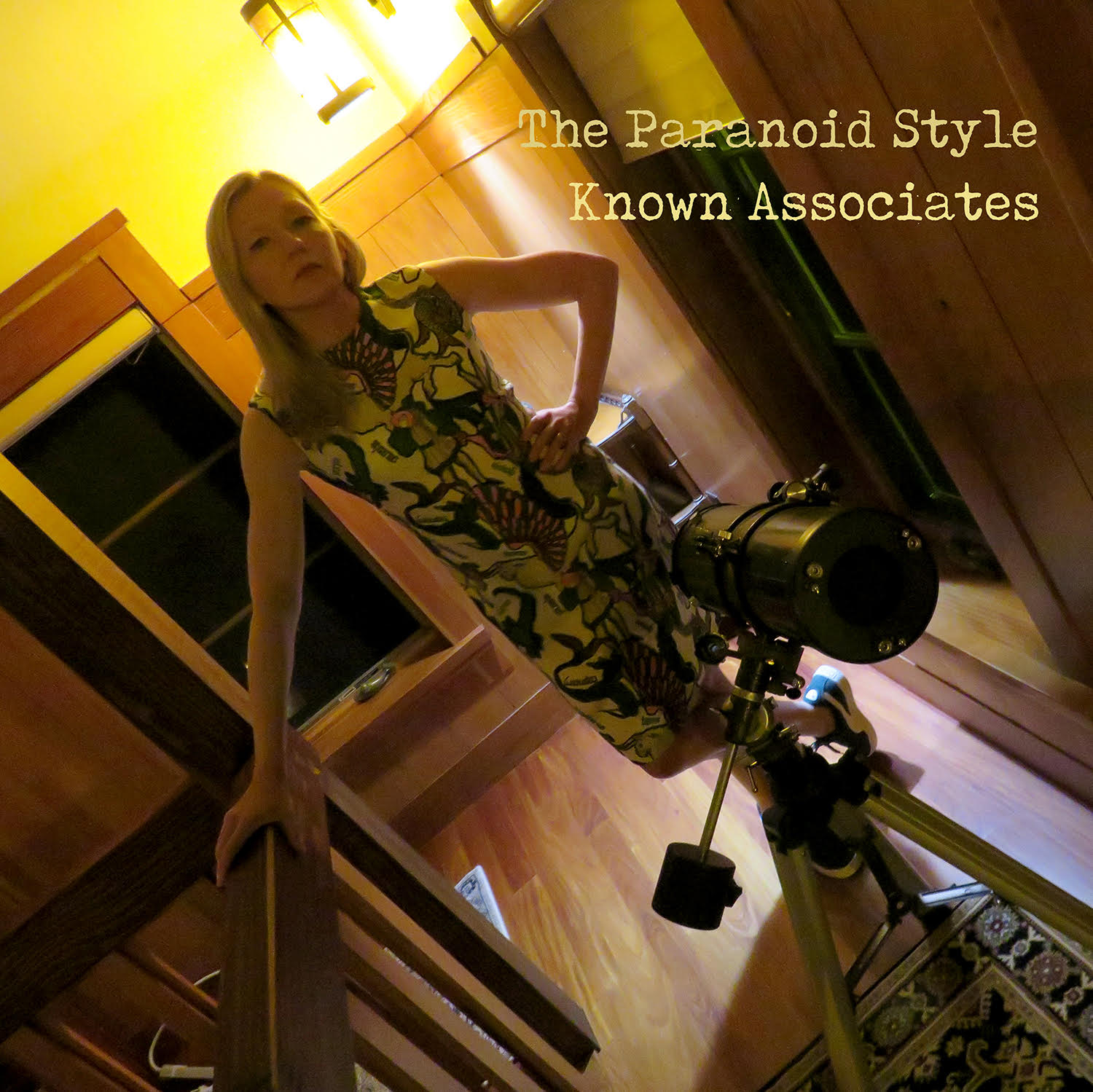
So, I wrote this song for Linda Ronstadt, whom I love so much. It’s called “It’s a Dog’s Breakfast.” That’s a Britishism for a hot mess, but it’s my favorite track I have ever recorded with the Paranoid Style, with killer additions by Lisa Walker from Wussy and Matt Douglas from the Mountain Goats. I never travel far without a little LR.
Elizabeth Nelson is a DC-based journalist and singer-songwriter in the band the Paranoid Style. She also hosts the New Pony/Southwest Review podcast Known Associates, where she speaks to fellow writers, artists and musicians. Her new album—also titled Known Associates—will be released on Bar/None Records in February, 2026.

More Web Exclusives