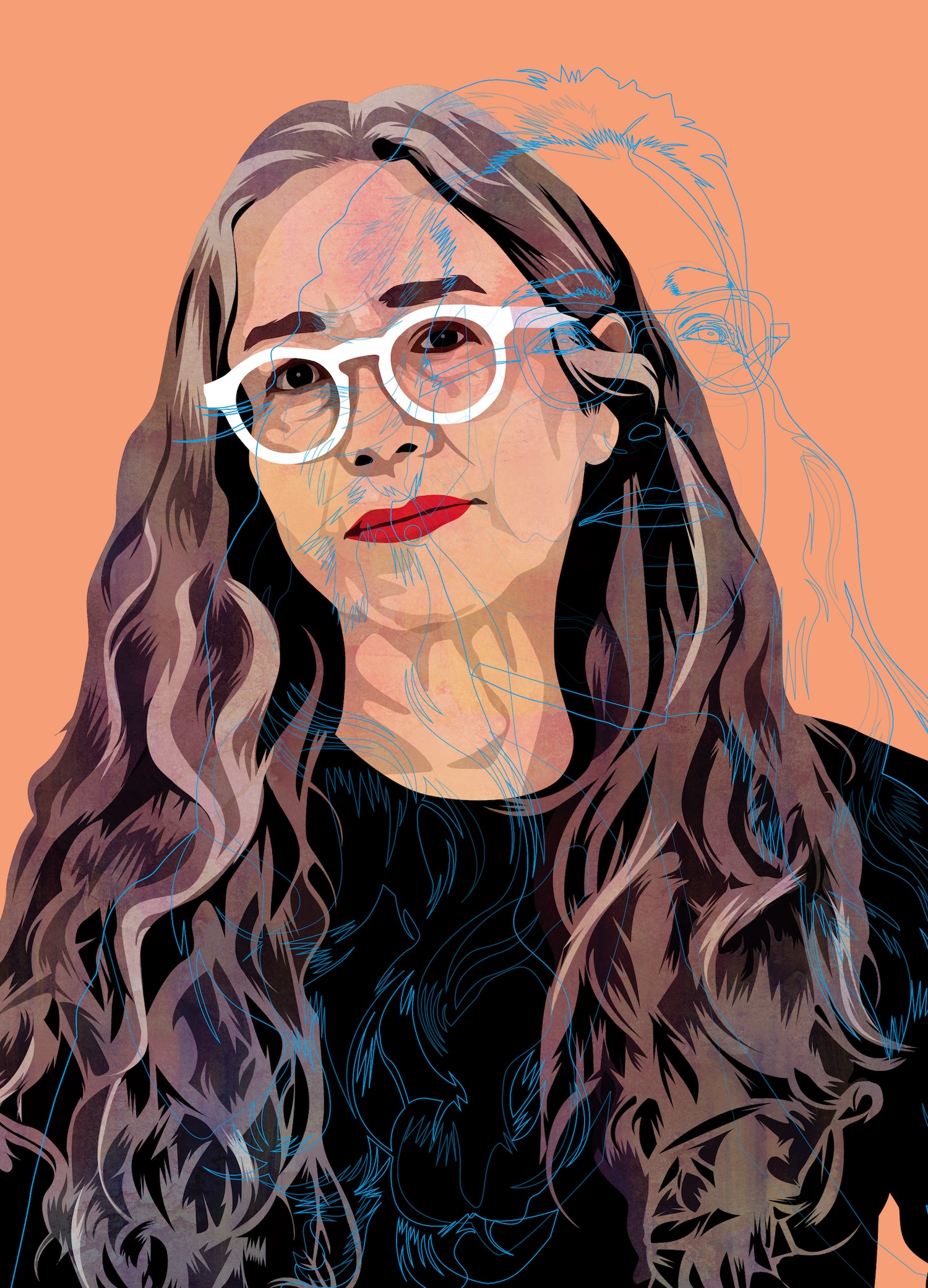
The Mexican writer Cristina Rivera Garza has been writing for decades. Her 2021 book, El invencible verano de Liliana tells the story of her sister, the victim of a femicide. The book crosses memorial with journalistic investigation and narrative reconstruction and has become a landmark of Latin American feminist literature. Its English version, Liliana’s Invincible Summer (2023), which Rivera Garza translated herself, won the 2024 Pulitzer Prize for Memoir or Autobiography. Rivera Garza is best known in English as a fiction writer, with translations of her books like The Taiga Syndrome (2018, tr. Suzanne Jill Levine and Aviva Kana), Death Takes Me (2025, tr. Robin Myers and Sarah Booker), and her New and Selected Stories (2022, tr. Sarah Booker and others). But texts like Liliana’s Invincible Summer that slash across most genre divisions are her most remarkable achievements. She is perhaps the best living literary critic of Latin American literature: works like Había mucha neblina humo o no sé qué (There was a lot of fog or smoke or I don’t know what; 2017)—a journey into Juan Rulfo’s “geological” excavation of Mexico—and Autobiografía del algodón (Autobiography of cotton; 2020)—a history of her own family and of Mexican revolutionary writer José Revueltas—are astonishing reinterpretations of Mexican literary history. Her essay collections, such as Escrituras geológicas (Geological writings; 2022) and Los muertos indóciles (2013; The Restless Dead, 2020, tr. Robin Myers) are encyclopedic and incisive, spanning the continent.
We spoke on the phone in early March as she prepared to give a lecture series inspired by Liliana’s Invincible Summer at the Colegio de México, the renowned institution in Mexico City, and a month before she published her new book, Terrestre (Terrestrial), a compendium of short nonfiction stories thematically connected to Liliana’s Invincible Summer. This conversation has been translated from Spanish and edited for length and clarity.
Federico Perelmuter: Your writing has changed a lot through the years. You started out in Mexico, writing for those tiny Marxist magazines that abound in our countries, seemingly read by nobody but [serving as] a testing ground for writers. Now you’ve moved on to major publishers. How has that evolution happened for you at the level of formal or thematic interests?
Cristina Rivera Garza: I think deep down I’ve always been, and always will be, a classic materialist. Conditions of production are very important. There might not be overdetermination, but there’s an active and organic relationship connected to ethical and aesthetic questions. I don’t think writing is a sublime or inexplicable vocation; it’s an embodied practice done in relation to other bodies. And because of that, it always touches questions of power, as has become clear to me over the years.
But the seeds of this have been germinating for a long time, and I’m quite proud of that. I’ve always worked interdisciplinarily because I believe, as [the eminent Argentine critic] Josefina Ludmer said so poetically, we live in a time of post-autonomous literature, in a world that is reality and fiction at the same time. These genre distinctions that dominated the twentieth century have really lost their purpose and their efficacy. We’re at a point where post-autonomous writings prove their worth not according to would-be universal aesthetic parameters, but by their ability to produce a sense of the present—to participate in, contribute to, interrogate, and subvert the conditions of production that correspond to all of us. In that sense, I think my classical materialism, if it has changed in any way, has accentuated with time.
The first novel I published is titled Nadie me verá llorar [Nobody will see me cry]. It takes a very obvious interest in the perspectives, discourses, practices, and experiences of the poor, the marginalized, and the racialized, as we now say. I was interested, even then, in the histories of women, the ill, those who exercise their power not from the center but from these multiple peripheries. Though I am also critical of that center/periphery relation. All of that is very present in the book, which relied on archival research in the files of recluses at the La Castañeda asylum. I think there’s a thread that goes from Nadie me verá llorar, which was published in 1999, up to the fiction/nonfiction books I’ve published since: Había mucha neblina o humo o no sé qué, my appropriation of Juan Rulfo, to Autobiografía del algodón, in which I also make interdisciplinary use of the archive, and, of course, Liliana’s Invincible Summer. I think there’s a continuity there—which is important and wasn’t clear to me, to be honest, but which readers have pointed out.
Like any contemporary author, I have a difficult and complex relationship with fiction. I think—and I’m going to cite [Karl Ove] Knausgaard—that we live in a world that is both reality and fiction. What we’re seeing in the US right now is the apotheosis of that, of the power that fiction can have, which is to make everything open to questioning. That has resulted in a difficult, complex relationship to fiction. I think that’s why I’ve been writing with other tools and another vision. It matters to me that writing continues to be a field of critical thought and practice. I don’t believe in a pure literature; I don’t think it exists. Texts or artifacts of writing have changed my life. I’d like to think that the books I’m writing can participate in that transformation, which is sometimes intimate. But where do great social transformations begin? Not there.
I still believe it’s important to renew utopian thought, to renew our thinking about a world that is unlike what we are living through now. That’s where imagination’s great potency lies, and its connection to writing: first, to realize that what we are living through is neither eternal nor fated, and that there are other worlds. I think that’s the critical imagination which writing brings us closer to. That spirit of continuing to lob questions that, hopefully, as the poet Eduardo Milán said, can do a little damage in the heart of civilization.
FP: You’ve traveled from the UNAM [the National Autonomous University of Mexico] to the University of Houston. How has that institutional change affected your writing practice?
CRG: I come from a family with a long tradition of migration, precisely between Mexico and the US. I’m the granddaughter of Indigenous farmworkers who fled from the drought in the Mexican Plateau and headed north looking for a way to survive. They were first hired as workers in the Coahuila coal mines and then they found a way to get the land that Lázaro Cárdenas’s government was giving out in the 1930s and ’40s, on the Mexican side of the border, in the state of Tamaulipas. It’s very clear to me that migration is not something that happens to a person; there are cycles of migration that run through families and communities, which has always been a big responsibility for me. I studied at the UNAM, which is a public school, and my education in the United States has transpired in public universities, so I think there are some continuities. Of course, universities in the US have very different functions from those in Latin America, but it’s very important for me to continue to participate and contribute to a sector that has been so battered in the US and which Trump would love to destroy completely.
The academy suffers from many of the defects that it’s accused of. I won’t deny it. But it still has aspects worth questioning and renewing. I’ve directed a PhD program in creative writing in Spanish at the University of Houston since 2017, a program we inaugurated around the time Trump deleted Spanish from the White House website, which, to me, gave what we do a degree of resistance and contestation. There are around fifty or sixty million Spanish speakers in the US, around ten or eleven million Spanish-English bilinguals. But [the Trump administration] just made English into the US’s official language, by an executive order. If that happens, it’ll be the first time in the history of this country. And monolingualism is one of the favorite weapons of fascist and authoritarian regimes to establish their idea of “us versus them,” this head-on struggle against migrants. I’ve always believed that writing is a space of critical action, and that definition is particularly important now. Doing battle at the level of language isn’t small or superfluous. On the left, we’re watching people like Bifo Berardi or Maurizio Lazzarato and these Italian intellectuals who speak of biocapitalism or semiocapitalism, and the fascist right is talking about post-truth. In either case, language plays a fundamental role in our time’s exercise of power. And that’s the matter with which we writers work—it’s no small thing; it’s fundamental. And I don’t take it lightly in the slightest.
FP: How do you think your use of language has changed? Has living in the US shifted your prose at all?
CRG: Since arriving, I’ve completed a PhD in Latin American history, which I did in English. I wrote my dissertation in English, taught history in US history departments, in at least three universities, in English. I directed an MFA at UC San Diego in English. And had two husbands whose primary language was English. My public and my private life were lived in English. Only recently, with this project at the University of Houston, have I returned to having a US-based professional life in Spanish.
But I think that if I’d stayed in Mexico, in an environment where Spanish was dominant, that I would’ve asked myself fewer questions about language. About the relationship between language and experience, about language’s artificiality. And what I call “translation mode,” in which I constantly think, has contributed fundamentally to any writing exercise I’ve completed since I began publishing. I published Nadie me verá llorar in ’99, in Spanish. It’s within a Latin American tradition but is a novel that I wrote in and from the US. Every book I’ve published in Spanish has been written from the US. That which has sometimes called experimental is intimately tied to this “translation mode” from which I see the world and from which I write.
I haven’t worked with Spanglish, for instance, which has a long tradition in the US. It’s an exercise most often carried out by second- or third-generation Spanish speakers who live in precarious conditions. I think it has given rise to a very rich literature, but with a very determined terrain. I arrived in the US as a graduate student with comparatively enormous privileges. I never felt that Spanglish was something that belonged to me. It’s true that there’s a structural Spanglish in the way I build my sentences, the kinds of sentences I write, where the sonic emphases land. And I think the interrogations that have come from grammar and linguistics are not just an intellectual exercise, but correspond to questions I’ve asked myself, living continuously between the two languages. Right now, I’m doing a series of interviews with writers who are part of the Spanish-speaking community but write in English, because I wanted to interrogate this idea that once someone writes in English, they’ve lost or are betraying their Spanish. My intuition says that isn’t the case, and I’ve been told as much in [these] interviews. Spanish and that other language transform—maybe not in the words of each sentence but in the rhythms, the cadences and emphases that require a much finer analytical eye. The person writing might not examine this intellectually or consciously, but it’s something that’s carried, like a bodily history of language. That relationship has always seemed very rich, very generative and productive to me. I think my literature would have been very different if I hadn’t emigrated to the US in 1998.
FP: And, like you say, it’s a tradition. I think of Borges as a writer where English runs like a current underneath his prose. Who did you interview?
CRG: I started with Raquel Gutiérrez, for a book titled Brown Neon, a series of personal essays. I also interviewed Vanessa Angélica Villarreal, a poet from the Rio Grande Valley. We interviewed María Mínguez, a Spaniard who works in San Francisco, and most recently a writer with a wild, incredible imagination called Fernando Flores. They’re the new generations, no? They’re on their first, second, third book. Javier Zamora is next, for instance. A few we haven’t finished yet. But I wanted to draw the veil from this idea of a language lost or left behind. Reality is always more complex, and I see it in my own work as well. I mean, I’ve lived between English and Spanish; I love both, and they’re both my home for different reasons. And they’re different kinds of homes, but I have an intimacy with both that I find necessary for writing.
FP: Do you feel there’s any relationship between that linguistic fluidity and the sense of genre fluidity you mentioned earlier? Había mucha neblina o humo o no sé qué, for instance, is an essay and a work of criticism, but not in any conventional sense, from its use of poetry to its narrative disposition.
CRG: It’s also a travel narrative. These last three books, in a strange and heterodox way, can also be called travel narratives. Travel is fundamental, as is research.
FP: How do you think you’ve been able to gather such disparate things? Was it a matter of doing what felt true to the project?
CRG: I think you need to have some impossible questions to write a book. Something sufficiently deep and unknown to sustain your interest for many years. These projects took at least five years each. And if you have complex questions—things nagging at you constantly—they’re usually things not answerable within one field of knowledge. We’ll always need tools, as many as we have on hand or as many as we can invent. I believe in cross-genre work, in the sense that the traditions or the questions that we associate with one genre can be used to interrogate another genre from within. I don’t work with the idea of hybridity or the melting pot, or with things that fuse together harmonically, because I don’t think that’s what happens. I believe in friction and constant questioning.
It’s a kind of method I’ve been developing throughout the years, what I’ve called “host genres” and “guest genres.” If the question is deep enough, we’re going to need different genres to enable our search. In my case, it works by sustaining a sort of “host genre,” which receives the “guests.” That way you can consider the frictions that happen when you jump from one way of writing to another, taking into account that they’re different, historically determined modes. It’s important to know that in order to put it into question. I remember that Saidiya Hartman, when she couldn’t find enough documents to write her books, especially Lose Your Mother, spoke of “critical fabulation,” which she needs to jump from documentation to that which you can never know because the archive is by nature incomplete.
FP: You started out writing poetry. Nowadays, you’re publishing less poetry in recent years. How has that relationship evolved for you?
CRG: There’s a Polish poet [Eugeniusz Tkaczyszyn-Dycki] who used to say: “I’m a contemporary poet. I have a difficult relationship to language.” If you didn’t, you wouldn’t be a contemporary poet. But it’s hard for me to speak on the one hand of poetry and on the other hand of narrative and on the other of stories, the novel, et cetera. Precisely because so much of what I do has to do with blowing up those borders and questioning them, subverting them if possible.
One definition of poetry that I love comes from Lyn Hejinian, a great California poet. She said that poetry is the language we use to investigate language. I believe that in an organic, visceral way, even though it’s a very intellectual definition. But I also think that any work of fiction or nonfiction should also be an investigation into the power of language. Sometimes it’s said that poets and short story writers write very carefully, sentence by sentence, image by image, implying that novelists sort of run along without much care. I don’t think that’s the case. What we think of as poet’s novels are novels in which every sentence has been carefully arranged and in which anecdote isn’t the only element of the contract between writer and reader.
Each genre has different traditions we can look through, but they also have traditions of contestation. It’s important to have that in mind in order to work very closely with my materials. Independently of the genre in which each of these books will be considered, what I care about is to be organically close to the materials I work with, to give them all possible attention and let them guide me. There’s an aesthetic possibility there that is also very important to me and, thus, also a questioning of power. And in that sense, it’s political—not because it’s a manifesto or principled, but because there’s a consideration of the exercise of power through language. If we’re inhabiting systems like semiocapitalism or biocapitalism, then we’re not talking about just superstructural things, we’re talking about the space where power is constructed in our world. It’s not that I try to keep this in mind; it’s with me when I set out on a project.
FP: You have a book of short stories coming out in April, Terrestre (Terrestrial)?
CRG: I don’t call it a book of stories. For me they’re speculative nonfiction texts.
FP: Where does that come from?
CRG: The last book I published was Liliana’s Invincible Summer, and as you can imagine, the book that follows that one was a very significant challenge. In many ways, everything that went into the structure of Liliana’s Invincible Summer is what I’ve unlearned over the last few years of my work as a writer. And I didn’t want to go back and confirm the power of fiction, because I don’t believe in it. But it was very important to me to use a clear, even denotative language at times, to be careful with revictimization and violence and so forth. In this book, Terrestre, I don’t term the pieces speculative fiction because they’re related to documents and materials with prints. But they take that leap—what Hartman would call critical fabulation.
Above all, they’re trips, other adolescent women facing the same world that Liliana faced, but they’re the ones who were able to jump out of the window in time. I asked myself: here is the history of femicide, which is so close to us, especially in countries like ours [I am from Argentina.—FP], though we know that the femicide epidemic is global. If others don’t discuss it, that’s a problem with their societies and their language, but they’re part of it. So in this book of shorter texts, my idea was to continue with that exploration of the teenage body and how it experiences, rejects, measures itself. The increase of violence—especially gendered violence—is a little like the B-side to Liliana’s Invincible Summer. It’s very close to it, even when the story takes us elsewhere. These are very proximal embodied experiences, and I want to understand the enigmas that derive from that encounter. And the potency that can come from it, especially looking toward the future. Not the end of the world, but the beginning of another world.
FP: Speaking of Liliana’s Invincible Summer. How have you reflected about that book’s reception? It was a very big hit both in the US and in Latin America. How did you experience that success?
CRG: I’m still thinking about it. I’m giving four lessons right now at the Colegio Nacional, four wide-ranging essays that are all connected to what the life of Liliana’s Invincible Summer has made me think about. For instance, I’m going to discuss translation and grief, in line with what we were saying about the relationship between English and Spanish. If we can really find truth in our mother tongue or if that’s impossible. We sometimes think the so-called mother tongue—linguists don’t believe in it—is the language you grew up in, and the first you encountered, [that it] will allow you to do more things. I doubt that. There are things that the other, strange language will allow you to do, precisely because there’s experiences you haven’t had in that language. And it offers protection which you might not have in the tongue you were born with.
I’ve spoken about the place of archives, the archive of breath, regarding what one is looking for, or what one finds in an archive, which isn’t simply information but forms. That’s what readers’ questions have made me ask. They’ve been a constant source of questionings, which has been very important for me. On the other hand, it was recently March 8, and Liliana received a lot of messages, pictures with her name at the march in Mexico City, the book being read out loud in her honor. In Milan as well. There’s a way we don’t forget her, which I think is essential because it’s not just about not forgetting Liliana, but not forgetting any of them. Keep them with us wherever we go. All of this is also part of another essay I’m writing, about the installation of the dead in our medium.
Anyways, all of this to say that I am thinking with the book, which was so generative in an activist sense. Which I think is important—it’s the making present that Josefina Ludmer spoke of. But I’ve also continued with questions that have to do with my trade, with the relationship between language and experience and media, the media we use to share that with others.
FP: You live in translation, but you’ve also translated. I’m thinking of your translation of [Fred Moten and Stefano Harney’s] The Undercommons. What does translation mean to you?
CRG: I have enormous admiration and respect for translators, who in a practical sense are often like agents as well. They draw bridges not just in terms of their work with language, but in more mundane matters. When you work with people like Sarah Booker, Robin Myers, Christina MacSweeney, and Jill Levine, all these fabulous translators, and so closely, what’s most interesting to me is that it reveals the plural, collaborative work of writing itself. Traditionalist ideas often present the writer as an isolated being, tied down by their own demons in an ivory tower produced by class and gender. And I think translation unveils that idea of the isolated genius and emphasizes that literature has always been plural, the work of entire communities. I’m very grateful for that; it’s something that has always been with me intuitively, but which has become very clear after working with translators of the caliber of these women with whom I’ve been fortunate enough to collaborate.
On the other hand, I think that when the translation is strong, it can even change the book’s genre. When El mal de la taiga was translated into English as The Taiga Syndrome, the book won the Shirley Jackson Award for psychological suspense, horror, and dark-fantasy literature. When that book came out in Mexico, nobody read it with that perspective. I thought it was effective and fair that the translation allowed that book to be read in a different light, gave it a new life in English. It’s not just about moving from one signifying system to another, but about how that transposition puts into question genres that are often thought to be established in one language but which [other languages] can destabilize. That work of destabilization also belongs to translation and is, to me, fundamental. In the little translation [work] I’ve done, I’ve mostly wanted to translate authors who I want to talk about with my friends in Latin America and Spain and who are not yet translated. Someone has to do it, and when I’ve had time, I’ve done so, as was the case with The Undercommons. That book has been fundamental for me. If I had time, I’d translate Christina Sharpe’s In the Wake: On Blackness and Being, which hasn’t been translated yet.
FP: I’m not sure in which book, but you translate the word wake into Spanish, which is not an easy thing to do because it has no clear analogue.
CRG: Absolutely. And in the African American tradition, wake has a very different meaning, puts everything into question.
I’d do it more often if I could—I enjoy it a lot, it’s very complex, and it sets off lots of conflicts for me, which is good for writing. I like picking out things that aren’t in the mainstream but which I think are fundamental for conversations of our time.
FP: What about travel? What is its function for you?
CRG: I’m not done thinking about that, to be honest. I connect it to the research process. Every piece of writing has to be related somehow to investigation, not in the sense of academic research but in a much wider sense of the term. If you’ve read In the Wake, there’s this image that is very generative for me where Sharpe refers to investigation as the moment where you sit down in a circle with others and begin to ask questions and listen to them intently. That care and attention is, I think, very important. Although the dictum in Latin America is that the scholarly and the creative are antithetical, I think the opposite is the case. The archive has a location, as Derrida said; a domicile, as [José] Revueltas said. You have to go there. The interview, the field research—you have to go. It’s a way of putting your body into it. That phrase or motto of “feminist research” is so important. In that sense, the land journey that connects your body with the territory is part of an investigation understood as a kind of care work. That care work is the only work that will allow us to speak about anything.
There’s a very intense discussion in the US, one that is rising in the Spanish-speaking world, about the problem of extraction. Not just materially but in terms of stories. And a critical question in that matter is: Who has the right to write about what? The answer that is given in terms of identity is deceptive and not generative. The idea is that you have to write what you know, when in my opinion we turn toward literature to write about what we don’t know. If we knew, it’d be very boring to write, like writing an academic paper. So to put our body on the line is part of that care that allows us to legitimately approach materials that are not our own. To question the distance that goes from our experience to the mediums we work with—that’s the work of writing. That’s why we’re called writers and not something else. We can’t avoid that critical trajectory. Everyone will have their own answer to that question, but we can’t avoid asking that question. And my answer, so far, is that my care work comes from putting my body on the line and going where I’m not, where the other is. Not to appropriate it, but to share an experience and share it with others. 
Cristina Rivera Garza is the award-winning author of The Taiga Syndrome and The Iliac Crest, among many other books. Her memoir, Liliana’s Invincible Summer, won the Pulitzer Prize and was a finalist for the National Book Award. A recipient of the MacArthur Fellowship and the Sor Juana Inés de la Cruz Prize, Rivera Garza is the Hugh Roy and Lillie Cranz Cullen Distinguished University Chair and director of the PhD program in creative writing in Spanish at the University of Houston.
Federico Perelmuter is an essayist and critic from Buenos Aires, Argentina. His writing has appeared in The Washington Post, The Baffler, and Parapraxis, among others. He is a contributing writer for Southwest Review and is at work on a book project about the history of metal extraction in the Americas.
Illustration: Alvaro Tapia Hidalgo
