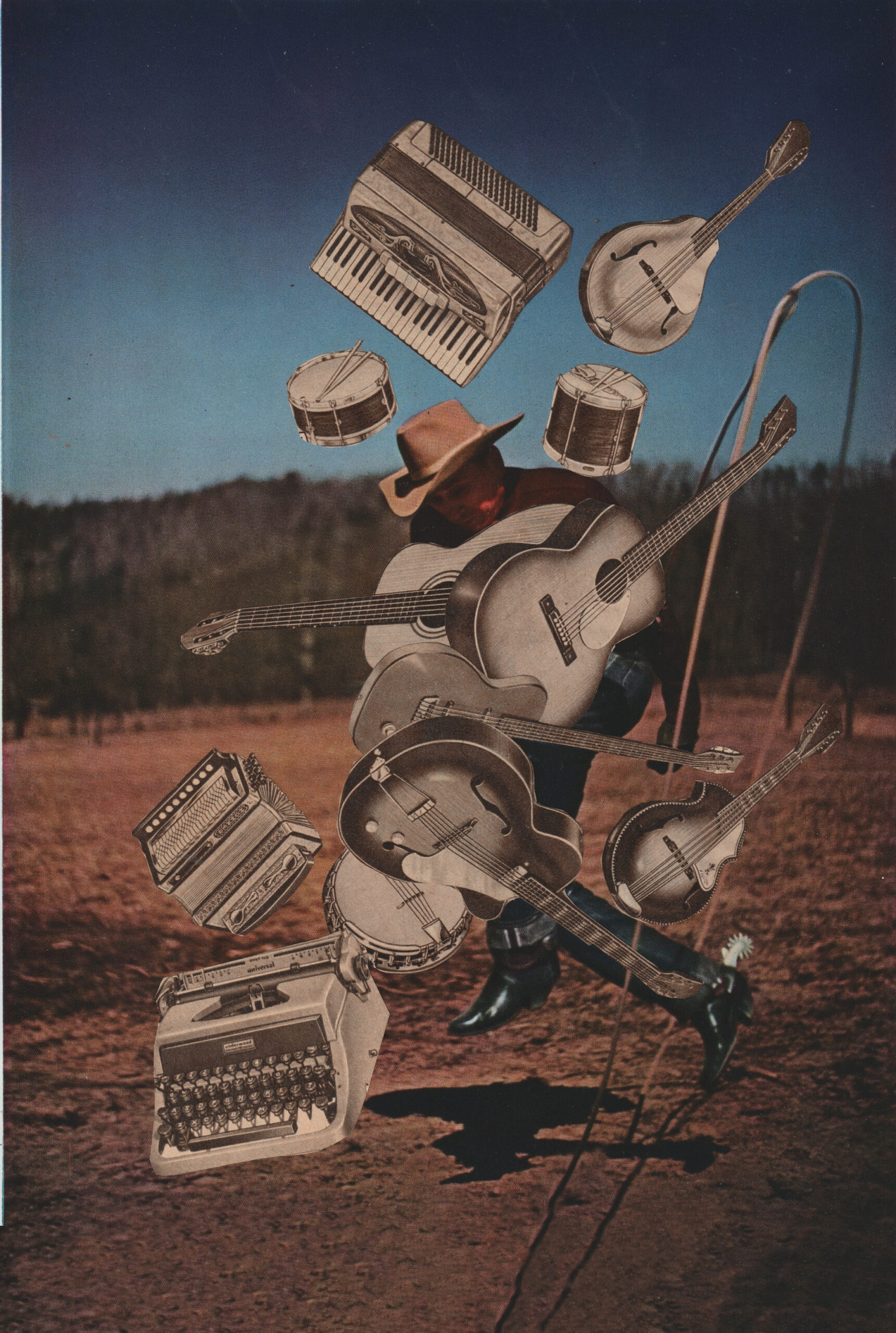
Hay que venir al sur is a column from the music journalist and Songmess podcast host Richard Villegas. Winking to the campy classic from the Italian disco diva Raffaella Carrà, the column is an invitation to explore the kaleidoscopic music scenes blossoming south of the border. In this issue, a plunge into the genre-anarchic world of Argentina’s RIPGANG.
“You’ve got to see K4,” Martha insisted for what felt like the tenth time, eliciting my standard reply of “Girl . . . ,” followed by an eye roll so deep that I could gaze within at my own annoyance.
It was September 2022, and I was in Argentina for a buzzy run of live sessions conceived between the Ministry of Culture and renowned Seattle radio station KEXP. I’d already caught about eight of these mini rock concerts and networked my tongue down to the nub, leaving no time to cruise a gay bar or embark on one of those long cinematic walks that perfectly capture Buenos Aires’ casual majesty. Eager for a change of pace, I acquiesced to my friend’s pleas. After all, I came all this way to peep new artists, and the national trap scene was one of the mightiest South American musical movements of the past decade—a fact I could recognize even if it didn’t pique my slightest interest.
The next day, I rolled up to La Tangente, a chic venue in the Palermo neighborhood where Martha got us on the guest list by hyping me up as an influential international journalist. To better play the part, I wore a Mexican press vest embroidered with the unintentionally funny slogan “In-depth investigation and journalism with a thirst for justice.” Passing the curtained threshold, I was surprised to encounter a pair of cops who stopped, frisked, and questioned me, then took my mugshot and released me into the venue like a too-small fish returned to a pond. Dazed, I glared at Martha and blurted, “What the fuck?,” to which she smiled and cryptically answered, “The vision.”
A noisy mix began to emanate from the speakers as a spotlight flicked on, finding K4—the singer, rapper, multi-instrumentalist, fashionista, and overall freaky alias of Tomás Matías Calabró—tossing and moaning on a bed, seeming to have a nightmare. Upon waking, he reached for a jumbo bottle of Quilmes beer and downed several gulps, then stumbled to the mic and launched into his blistering song “Plancha caliente.” Suddenly lucid, he wailed about deceitful governments and Malvinas-shape scars, arms flailing about and backed by machine-gun drums. A few tracks later, he reached for an acoustic guitar and leapt into the crowd as fans opened a pit so he could sing a folky ballad while laid out on the ground sans amplification. As the show progressed, I could trace faint hallmarks of what I understood to be trap in mutant beats and face-tatted guests, but this was radically different from the unwashed chauvinism and mumbled boasts of massive stars like Duki and KHEA. No, this was closer to punk: younger and more ferocious, at times sexy but eschewing tired bars about racks and titties.
My mind raced; Martha grinned. Though she held down a full-time office job back in her native Guatemala, she was in the process of transitioning into the music industry and had grown devoted to Argentina’s thriving scene. That night, she introduced me to Dillom and Broke Carrey, rappers from K4’s same crew, the RIPGANG, all of these names registering for the first time. She and the collective’s press guy, Fran, explained that, up north, people still thought South American trap was governed by the percolating Atlanta sound of the 2010s, but that much had changed since the pandemic (so much so, they didn’t even call it trap anymore). Hardened peripheral experiences were no longer prerequisite for crafting poignant bars, especially in a city where middle-class kids are raised fast-talking in the street. The same post-genre freedoms applied to visual storytelling, with fellow RIPGANGer ill quentin famously putting on an album-release show at a trendy art gallery where paintings and sculptures had to be removed mid-performance as fans frenzied beyond the staff’s control.
The innovative collective was born in 2019 as an evolution of the prior ensemble TBB, or Talented Broke Boys, composed of Carrey, quentin, and Dillom, as well as visual artist and animator Fresco. Swelling numbers matched the outsized ambitions of their creativity, so adjustments and rebranding were in order. The name RIPGANG better suited newcomers like Muerejoven, perhaps the most orthodox in terms of trap codes, but with wit indebted to social media’s zingy brevity. That year, he broke through amid a feud with activist-rapper FEMI, who tried canceling the rookie emcee after he mocked preachy conscious hip-hop. Muerejoven responded with the trolling “Gratis,” gloating about the free promo and swelling fan base gained from the clash, hoisting his adversary with her own sanctimonious petard.
On the flip side, Saramalacara gained a global fan base with brusque collisions of trap, nightcore, and emo, shrouding herself in dark-web aesthetics that both unsettled and facilitated dream collaborations with Spanish hyperpop star Rojuu and Japanese vocaloid diva Hatsune Miku. I’m especially fond of Sara’s early hit, “Water,” alongside RIP-affiliate Taichu, which starts off as a bratty high school trap flex in the vein of Bhad Bhabie and gradually expands into an all-out rage supernova. For her 2026 LP, Mataderos, the name of the historic meat-processing district where the rapper grew up—the mineral stench of blood filling the air and glass shards scattered about the street—her niche meta-reality got a taste of the big leagues with production collaborators behind hits for Playboi Carti, 100 gecs, and Oklou.
In their book, El ritmo no perdona, a critical history of Argentine trap, hip-hop, and RKT, authors Camila Caamaño and Amadeo Gandolfo break down the crew’s refreshing irreverence: “What’s so novel about the RIPGANG? Many things: their self-made label (Bohemian Groove Corp.), their friendship dynamic, the humor, the expansion of influences, a clear aesthetic brand that breaks with the classic dress elements of trap, and more conceptual aspirations in how they design their public personas. Sometimes they look like cartoons or computer avatars. Other times they look like the kids you run into on any Porteño corner.” The emergence of these enfants terribles presaged a new wave and clashed with forebearers who dismissed their artsy, mischievous antics as un-street, which in turn positioned the RIPGANG to shape and lead Argentina’s new youth culture: “If in the beginning this collective seemed like the class clowns, their intellectual interests, cultural consumption, and an openness to bring their ‘inner world’ to the foreground (made up of feelings, frustrations, violence, and mental health problems) shaped a capacity to represent their own generation.”
Still in Argentina and determined to break this story northside, I headed to the offices of Bohemian Groove Corp., the imprint that provides infrastructure for the crew’s endeavors. The classically Porteño art nouveau house serves as both base of operations and museum, complete with busy execs and social media managers plus artifacts from throughout the RIPGANG’s vast cinematic universe. Over a brief tour, I spotted an uproarious Playboy mockup with a scantily clad Dillom on the cover, as well as the decked-out shopping cart from Carrey’s dembow-fueled “Carrito” video. Then I was ushered into a backroom with Fran, chief creative director Noduermo, and Joaco, one of the cops from the previous night now revealed as head of label distribution.
During an hourlong interview for my podcast, Songmess, the team likened Bohemian Groove to a dream factory where friends and their collaborators can make steady, paid work and have their visions amplified regardless of established genre or industry paradigms. In fact, trap’s new luminaries were on the verge of signing Nenagenix, a grunge band acting as live support for Saramalacara’s mosh-prone shows, and in the long run spawning solo producer careers for dayvan and Estratosfera, who’ve remained in the crew’s extended talent pool. It’s no accident that the organization’s name bears a striking closeness to Bohemian Grove, the private compound where artists, politicians, and scientists from the esoteric Bohemian Club in San Francisco have gathered for secretive rituals and retreats for more than a century. This, too, is a sprawling network of visionary weirdos, and far from a casual operation.
I left the meeting with an invitation to attend the listening party for Odd Mami’s debut album, Mosaicos, one of the clearest expansions of the RIPGANG’s sonic palette. Though I prefer cuts like “Kaneda,” a 2019 Akira-inspired bop melding trap and R&B, the moody singer moved on to alt-rock in the vein of Veruca Salt and Olivia Rodrigo. However, the event brought into focus the collective’s interdisciplinary curiosity, commandeering an aristocratic building in the old-money Recoleta neighborhood and unleashing a colorful girlish fantasy: clouds and blue skies projected onto the ceiling, pastel paintings as analogs for each song, and a giant Tamagotchi sculpture that Disney-fied the art-gallery vibes. As the record played, the audience peered through a glass door into a recreation of Odd Mami’s bedroom, complete with furniture, stuffed animals, and even a sunset-lit false window, as collective members popped in for songs where they were featured, acting out adolescent hangouts and adult smoking habits.
When I returned to Buenos Aires two years later, I went to another Odd Mami release, this time for her sophomore LP, Donde van los perros. If its predecessor served teenage angst à la Hannah Montana, this was her Euphoria—darker, distorted, and highly Instagrammable. For the occasion, Noduermo transformed Spotify’s offices into an immersive installation once more staged as a girl’s bedroom, now evoking the subterranean rabbit nooks from vintage children’s books, lending the songs an unexpected tenderness. The evening made me reconsider the place the RIPGANG occupied not only in culture, but also in the physical realm, and how their art could refract new dimensions depending on location. During that trip I crashed an asado to celebrate Muerejoven’s new album, La vida real, where songs about drug hustle and dead presidents blossomed into party bangers over poolside cocktails and prime cuts of meat.
Shifting spaces are an excellent rubric for measuring Dillom’s meteoric career, an adventure that started playing tweenage house parties with the punk band Los Slots, and that in 2025 packed more than thirty thousand fans into Vélez Stadium (a herculean feat captured on the documentary Por cesárea: Irreversible). Though he was raised in the middle-class neighborhoods Colegiales and Belgrano, at age fifteen—bitten by the trap bug that was becoming Argentina’s new mainstream—he set up a studio in the tenderloin of Villa 31 to nourish and promote his beatmaking skills. He began penning songs soon after, taking on a nasal vocal affectation and breaking out with a rap about sniffing glue that became popular on social media and opened doors usually barred to provocateurs. His 2019 live session with superstar producer Bizarrap is reviled for its grating taunts of the trap establishment, while for an awards-show appearance he wore a sweatsuit printed in the logos of every major record label, as well as Bohemian Groove Corp., tailoring the music industry to his relaxed measurements. However, Dillom’s debut album, Post Mortem, proved his ambitions were larger than getting a rise out of his peers, cobbling anthemic tracks that melded trap, cumbia villera, and indie rock, accompanied by colorful music videos starring puppets and creepy carnival clowns. The first time I interviewed him was in Mexico City, ahead of a show in a hotel undergoing renovation. The chat was delightful, though we both agreed speaking to a horror-core rapper in an utterly gutted guest room was a bit on the nose.
What’s most fascinating about Dillom is his success in forgoing the expected route. When touted as trap’s new messiah, his sophomore LP, Por cesárea, delivered a conceptual rock opera about an everyman’s descent into madness that echoed Argentina’s current social polarization. Some fans accused the rapper of currying favor with the obstinate rock establishment, especially after a buzzy feature with the legendary Andrés Calamaro; but guitars have played a pivotal role in the country’s resistance movements dating back to the dictatorships of the 1970s. On the album’s breakout hit, the psychedelic party anthem “Buenos tiempos,” Dillom takes thinly veiled shots at Libertarian President Javier Milei, breaking with his infamously apolitical, dirty-Sprite-sipping forebearers. But where Dillom has remained true, is the longstanding tradition of pulling peers forward as his name draws more eyes and budgets. Guest verses on tracks from Six Sex, MARTTEIN, and Juan Lopez helped put these underground stars from the dance, industrial, and indie rock scenes on larger international radars, while Dillom’s lead producer, FERMIN, and even his sound engineer, Santiago De Simone, are now highly sought hitmakers.
The last time I saw Dillom was at another asado, this time to toast the new album from Broke Carrey, Hijo del país, one of my favorites of 2026 and a perfect encapsulation of the RIPGANG’s constant metamorphosis. Though sticking to his OG rap guns, Carrey enriched his beats with guitars and percussion drawing from Argentina’s towering roots canon, with Andean demons manifesting as economic maladies on “Zupay,” while the swelling ballad “Monumento” invokes breezy tonada cuyana to serenade a paramour’s, well, monumental ass. In a later interview, he told me the record stemmed from the question “What does it mean to be Argentino?,” and though he never landed on an answer, tapping into countryside rhythms, folktales, and sociopolitical baggage drove him to emphasize how they’re all children of the same land. Looking out on the asado, his vision was clear. Noduermo set up two long banquet tables that were filled with all sorts of artists, journalists, bookers, family, and well-connected friends, mingling and cackling as if at Sunday-night dinner. There was also a car stuck up in a tree that I can only assume represented the country’s constantly swerving state.
As I soaked up wine and gossip, I felt a tap on the shoulder. It was K4, who hugged me and said, “I heard you didn’t like my album.” He was right-ish. I felt that his rock-tinged 2025 LP, Yo también les tengo miedo, genuflected to easy algorithm listening when compared to his previous disconcerting work. Frankly, I was more taken aback at discovering my opinion rang within the walls of Bohemian Groove Corp. than by the actual confrontation. Throughout our chat, I was relieved to see K4 was still crazy as hell, silly and gregarious, and that he’d focused his artistic delivery to better articulate the internal chaos. Though I failed to connect with the record, I can also concede the preconceived notions that influenced my listening experience.
I’ve realized the same contrasts that attracted me to these artists kept me from fully engaging with their work. The whole point of the K4 record is that in his devilishly original weirdness, he feels alone and misunderstood. That when Carrey eviscerates Libertarian selfishness, he also extends a solidary hand, Argentino to Argentino. And when Dillom plunges his fans into the horrors of femicide on the shocking “Muñecas,” it’s in hopes of dismantling the violent incelibacy poisoning a generation. The RIPGANG is both a creative collective and a group-therapy circle, dream weavers with little interest in people-pleasing. And that isn’t their job. An artist lives their life and shares their story, hopefully in interesting ways. Whether you like the end product holds no bearing, but opening up to receive it is a journey all your own.
Richard Villegas is a music journalist, podcaster, and professional chismoso with bylines in Rolling Stone, Pitchfork, Bandcamp, and Remezcla. When not raging behind his desk in the Dominican Republic, you can find him traipsing through Latin America in search of fresh underground music and a cheap local beer.
Illustration: Kevin Sampsell
