Ratcatching in the Ruins
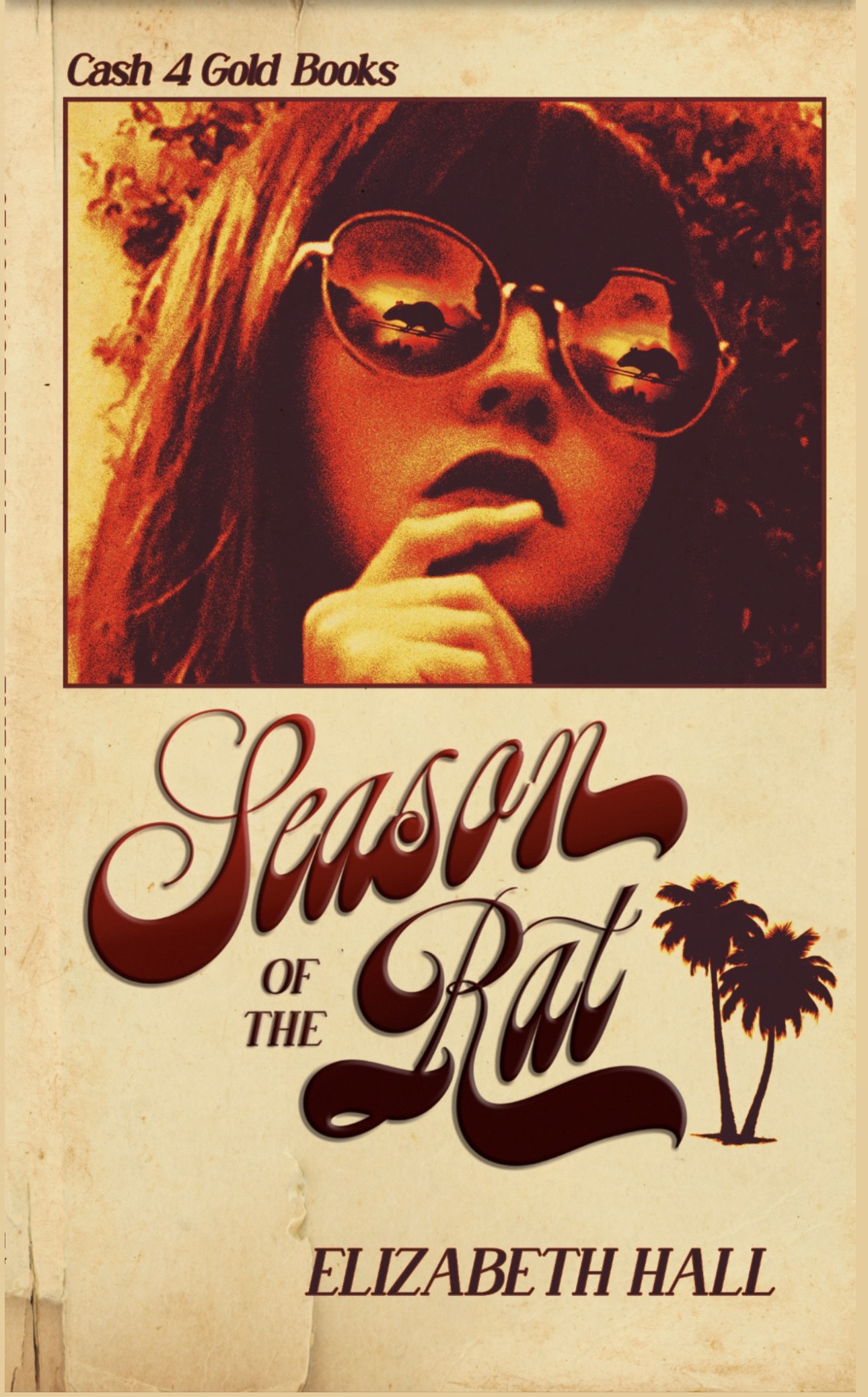
“People tell me rats are as scared of us as we are of them. But I have seen them charge into the night without compunction. No discernable hesitation. As if it’s possible to know every contour of the darkness ahead.” So the narrator of Elizabeth Hall’s Season of the Rat (Cash 4 Gold Books, 2025) muses as she faces (and endeavors to know) the contours of darkness that lay ahead following a sexual assault in her recent past and a potential romance in her near future. Studded with prose as laconic as it is sun-cut clear, this horror- and noir-tinged novella of SoCal autofiction is as devastatingly witty as it is sadly devastating. Braiding genre riffage with a concentrated and caliche-hard confessional, this tiny, eighty-four-page beast is as strange and fearless as the curious rodent that soundtracks the narrator’s nights.
Season of the Rat is a deftly poetic act of compression (compression to stem a bleeding wound, compression of space and time) spanning two restless years, from the fall of 2018 to the spring of 2020. Within that narrow corridor, the book catalogues the history of a California cult, traces the arc of Orange County’s once thriving and now barren gay-bar-and-group-sex scene, and studies the nature of rats and rat culture after a rodent takes refuge on the narrator’s roof.
Serving as a kind of agitated, ceaselessly seeking, feral thought bubble above the narrator’s head, the skittering rat appears above her bedroom shortly after her assault. One sleepless night folds into another; the narrator cohabitates with the former partner who raped her while her mind turns increasingly to the animal above whose claws scratch out Morse-coded thoughts back to her until dawn. Her need to know and understand the black, whip-tailed thing that now haunts her bedroom leads Hall’s protagonist to question her sexual identity, sending her on an obsessive search that branches ever outward from rat life and rat history and rat love to the nested connections in secret SoCal socialist histories and the banality of human cruelty. What begins as a form of compulsive, research-based escapism becomes something else entirely, as the narrator reconstitutes herself over the course of this at times brutal, at times beautiful season.
The kind of season a person longing to be reborn can thrive.
With a style that mosaics the informational hyperdensity of a TikTok marathon with the goldenwashed and bleakly funny diary-as-drama, drama-as-diary of Didion’s eviscerative Play It as It Lays, Hall has crafted what reads like a limitless expanse of personal discovery and California mystery. As the Angelino narrator confronts the eccentric, Pynchonian cultural histories that create the rat-raced world she is trapped within, so too does she discover more and more of who she is—her fears, her desires, her needs, herself, even going so far as to leave a note of thanks for her rat neighbor, a kind of word sacrifice mirroring her own rebirth. “I don’t want the rat to read my words,” she writes. “I want it to take my words back to its nest, pee all over them, and remake them into a new world.”
From the ports of San Pedro to the devastatingly overpriced apartments of Hollywood to the desert sandscapes surrounding LA, Season of the Rat cruises through an ever-shifting series of landscapes that tease out dangers and discoveries alike for anyone with the curiosity to know the contours of darkness in the city’s—and the narrator’s—heart. “Prolonged habitat drought and increased land development in LA County has led to habitat destruction,” she laments. “Rats cannot invade our city. The city is already theirs.” Chronicling these events in the wake of an assault transforms the world of the novella into a kind of strange, appropriately Californian dream place, rendering the protagonist’s reality an aftermath, literally and figuratively, of hypnagogic ruin following a horrible event. The suffocatingly expensive LA housing forces her to room in the wreckage of a dead and harmful relationship; the celebration of queer enclaves in the OC becomes a study of that area’s painful transformation into right-wing stucco hell; the entire planet’s descent into shell-shocked pandemia during a plague generates queasy postapocalyptic possibilities, a mental and physical world always threatening to sink into stunted ruin.
The kind of place a rat can thrive.
With Season of the Rat, Elizabeth Hall has created a genuine marvel—a work that, like the creature in its title, defies easy categorization and that also, like the rat, demands our stunned attention. That a novella so small can contain so much is a colossal act of curiosity; that so much story can be located within a single rodent is an act of humanity no less curious.
Travis Woods lives and writes in Los Angeles. As a teen, he stole the Corvette of a WBO world heavyweight boxing champion. He has a dog and a tattoo of Elliott Gould smoking. Bob Dylan once clapped him on the back and whispered something incomprehensible. He always keeps a Jim Thompson paperback in his back pocket and a karambit knife in his boot. These are the only interesting things about him.

More Reviews