“When I get up in the morning and go into the bathroom to shave, I look in the mirror and say, ‘Who is that guy?’”
Buck told this to his fifteen-year-old nephew, Roy, when Buck was in his fifties. He would go on to live for forty more years. Buck said this a year after his father, Roy’s grandfather, died at the age of eighty-two. After having lived most of his life in Chicago, Buck and his second wife, Carmen, had moved to Tampa, Florida, where he established a construction business, building tract houses. Buck was a handsome man, he was vain, and since his early twenties had been what was commonly referred to as a ladies’ man. He had occasional girlfriends while he was married but nothing really serious until he began seeing Maureen on a regular basis.
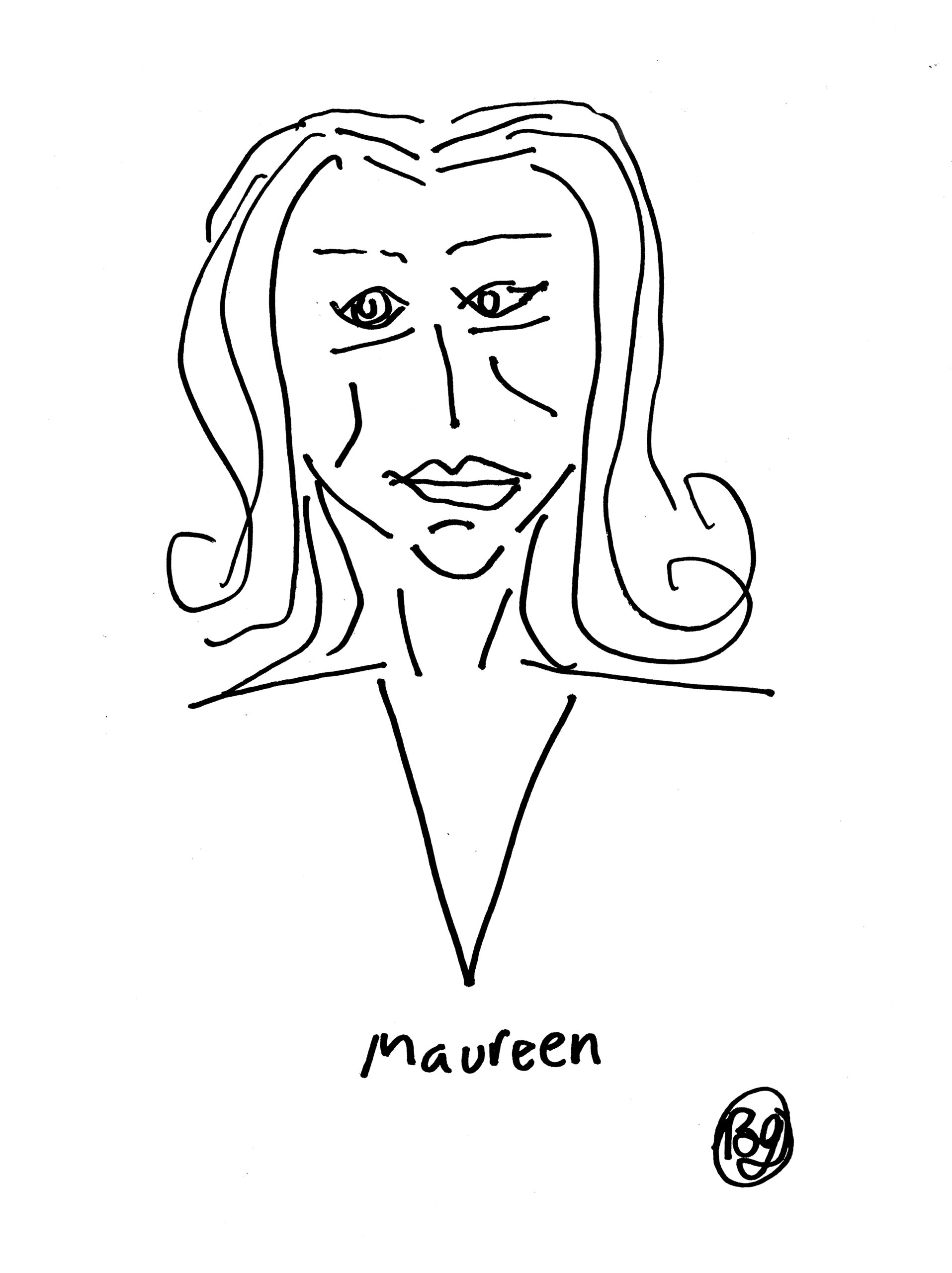
Maureen was a divorcée in her late thirties who lived with her eighteen-year-old daughter in one of the tract houses built by Buck’s company. She was an attractive tall blonde who took courses in art and philosophy at the University of South Florida and was a serious painter. Buck took her on trips out of the country, most often to Honduras, where Buck kept a house on the Bay Island of Utila. Maureen enjoyed windsurfing there, even in shark-infested waters, and doing oil paintings of local people and places. Buck was impressed by her artistic talent and fearless athleticism. A year after their relationship began, Maureen prevailed upon Buck to marry her in Roatán, the capital of the Bay Islands. “We’ll just be married in Honduras,” Maureen said. “You can keep Carmen in Tampa.” Buck did not take this marriage seriously and did not tell anyone about it.
There came a time when Maureen requested that Buck financially support both her and her daughter, who had psychological problems which required regular medical care. Buck had never minded giving Maureen money on occasion, but he balked at this demand. Maureen threatened to reveal their liaison to Carmen and, if necessary, to sue him for alimony. Buck informed Maureen that their Honduran marriage would not be recognized legally in Florida, and therefore he owed her nothing.
Maureen consulted the attorney she had used for her previous divorce; he explained that she had no legal rights but could sue Buck for breach of promise, though that would be determined on a basis of her word against his. The attorney added that her chances in court of achieving financial satisfaction were not good. The best thing for Maureen to do, he suggested, would be for her to prevail upon Buck to settle their situation privately, if possible without rancor.
When Roy, who had met Maureen and liked her, asked his uncle why he didn’t see her anymore, Buck told him what had happened and said, “Don’t ever expect relationships, either personal or professional, to end well, especially when money is involved.”
“Did you have to pay off Maureen?” Roy asked.
“I gave her a little something. She wasn’t happy with the amount, but she took it.” “What about in Honduras?”
“What about Honduras?”
“You’re still married to Maureen there, aren’t you?”
“In Roatán, all a man has to do to get rid of his wife is to pay a judge fifty dollars to declare a marriage null and void on the basis of incompatibility.”
“What if they have children?”
“The same. It’s up to the man if he wants to pay child support.” “I guess it’s better to be a man in Honduras.”
“Yes, nephew, it’s a good place to get married.” “I’ll remember that, Unk.”
“I’ll tell you a story about Maureen. She wanted to go to Paris, so I took her there. We flew first class both ways. The first thing she wanted to see was the Eiffel Tower. We went all the way to the top. We stayed at a swanky hotel, went to all of the art museums, the best restaurants. I hired a car and took her to Versailles to visit the palace. After we got back to Tampa her friend Agnes told me that Maureen complained to her about how I rushed her around Paris, only stayed a week, said I needed to get back to oversee a building project.
Maureen told Agnes that she knew I couldn’t cover up a longer absence to Carmen. She even said I left her alone one night for two hours so I could go with a prostitute. Maureen and I were never apart the whole time.”
“Did you go to Paris with Maureen before or after you married her in Honduras?” “After.”
“So it was like a honeymoon.”
“I suppose she thought of it like that.”
Roy did not ask his uncle about Maureen again, but one night when they went for dinner at a restaurant they saw her sitting at a table with a man. Maureen saw them, too, but pretended she hadn’t. 
Barry Gifford is the author of more than forty published works of fiction, nonfiction, and poetry, which have been translated into thirty languages. His most recent books include The Boy Who Ran Away to Sea, How Chet Baker Died, Black Sun Rising / La corazonada, Roy’s World: Stories, 1973–2020, and Sailor & Lula: The Complete Novels. He cowrote with David Lynch the screenplay for Lost Highway. Wild at Heart, directed by David Lynch and based on Gifford’s 1990 novel, won the Palme d’Or at the Cannes Film Festival in 1990. Gifford lives in the San Francisco Bay Area.
