I Wake Up Streaming | August 2025

In this edition of “I Wake Up Streaming,” novelist William Boyle rounds up his top streaming picks for the month of August. The column’s name is a play on the 1941 film I Wake Up Screaming, starring Betty Grable, Victor Mature, and Carole Landis. While the film’s title hits a pleasing note of terror and despair, changing that one letter speaks to the joy of discovering new films and rediscovering old favorites, as well as the panic that comes with being overwhelmed by options.
Over the Edge (Tubi)
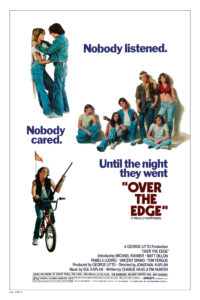 RIP Jonathan Kaplan, who had a wild and varied filmography ranging from exploitation and Blaxploitation (Night Call Nurses, The Student Teachers, The Slams, Truck Turner, White Line Fever) to the Shirley Muldowney biopic Heart Like a Wheel to made-for-TV movies like Death Ride to Osaka (aka Girls of the White Orchid) and music videos for John Cougar Mellencamp, Barbra Streisand, and Rod Stewart, and then went on to a string of bigger films, most notably The Accused, Unlawful Entry, and Love Field. Oh yeah, he also produced and directed forty episodes of ER. But his best and most enduring film is 1979’s Over the Edge, a timeless tale of teenage rebellion. It was famously Kurt Cobain’s favorite movie. Cobain once said: “Over the Edge pretty much defined my whole personality. It was really cool. Total anarchy.” Written by Tim Hunter (River’s Edge, Tex) and directed by Kaplan, Over the Edge tells the story of a group of teenagers brought by their parents to a prefabricated under-construction suburban community to get away from the crime they fear is rampant in the big city. The name of the town is New Granada and, of course, the plan backfires. The kids feel trapped. There’s nothing to do. They gather at a rec center every day. They throw parties when their parents are away. Sex, drugs, rock and roll, and vandalism are key pastimes. The police are a problem, especially the authoritarian Doberman (Harry Northup). Carl (Michael Eric Kramer) is the character we follow most closely—he’s a good kid, the child of ostensibly decent and caring parents, and he starts to recognize how fucked things are. His closest friend is Richie (Matt Dillon, in his film debut), a rebel and provocateur. When Doberman crosses a line, all hell breaks loose. The kids, you guessed it, go over the edge. Way over. It’s thrilling and disturbing, and it’s a far different experience watching the film in my midforties than it was at sixteen, seventeen. It no doubt inspired another favorite movie of mine, 1990’s Pump Up the Volume, and it essentially has the same message: Whatever you do, don’t conform. Real death is better than that kind of death. I don’t know if I exactly have sympathy for the parents now, but it is easier to see how they also get trapped by bullshit lies, by the dream of something impossible. The soundtrack is an all-timer: Cheap Trick, Ramones, Van Halen, Jimi Hendrix, the Cars, and the Five Stairsteps’ “O-o-h Child,” which is used to great effect.
The Driller Killer (Tubi)
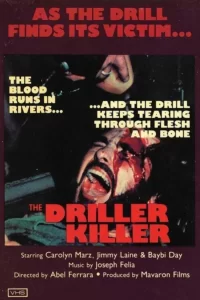 I just finished reading Abel Ferrara’s forthcoming memoir Scene (more on that soon) and revisited this for the first time in a long time, his debut feature (sort of—he’d directed a porno called 9 Lives of a Wet Pussy under an alias before this) from 1979. Inspired by The Texas Chain Saw Massacre, he and writer Nicholas St. John (who collaborated with Ferrara on many of his best movies before they parted ways) set out to make a slasher set in the world of the late ’70s NYC art scene. Ferrara himself plays Reno Miller, an on-edge artist who lives with two women (Carolyn Marz’s Carol and Baybi Day’s Pamela). He’s working on a massive painting of a buffalo, under deadline with his art dealer. When a punk band moves into the apartment below, their loud practices keep Reno up and drive him insane. Add to that all the unpaid bills that are piling up—their rent past due, the phone and electricity. Eventually, Reno buys a power drill and starts killing derelicts out on the street. That’s about the gist. When I was in college, I kept an axe in my room. When the guys I lived with got too rowdy, usually bringing whoever was left at our regular dive bar back home at 4 a.m., often gutter punks with nowhere else to go, I’d come down with the axe and threaten (lovingly) to go apeshit. I was trying to be disciplined, trying to get up early to write before classes and work. It was all a goof—they knew I’d never swing that axe and I never did, not even when I was drunk. (I should say, however, that one time I left the axe out in the living room, and one of my housemates brought back the folks that were still at the bar at closing on a weeknight and among that crowd was a nutjob who took my axe, went outside, and chopped down our neighbor’s tree. That very guy, several weeks later, shot up our little hippie college town in the Hudson Valley with an automatic weapon and went to jail, where he probably still is. No one was hurt or killed, thank Christ. Our neighbor, who I called Satan Shitballs, was pissed about the tree. I never wielded the axe again, even in jest.) All that to say: Leave it to Ferrara and St. John to make a Catholic-haunted slasher movie about an artist driven over the edge by overdue bills and people annoying the fuck out of him. No one else could’ve done it. No one else would. On the commentary track for the Arrow Blu-ray released back in 2016, Ferrara says: “If I paid to see a movie called The Driller Killer, and this was it, I would punch the director in the fuckin’ head.” He also says, “I don’t want to give any fuckin’ maniacs any fuckin’ ideas with this movie. Fuckin’ kids start drilling each other. It’s fuckin’ crazy.” I love this movie so goddamn much.
The Hungry Ghosts (The Criterion Channel)
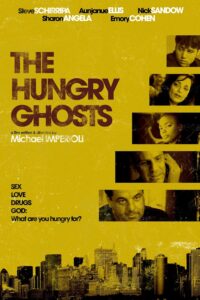 I’ve been wanting to see Michael Imperioli’s directorial debut for a while. It was released in 2010 but feels a lot like the ’90s indies Imperioli cut his teeth on. It’s a tale of interlocking lives and fates in late ’00s New York told over twenty-four hours or so. Steve Schirripa plays late-night WFMU deejay Uncle Frank, and he’s in a bad place with a bad attitude—a divorced father with a drug problem and a gambling problem, always seeming like he’s on the verge of a panic attack or heart attack. His relationship with his son, Matthew (Emory Cohen, in one of his first major roles), is beyond strained. His ex-wife, Sharon (Sharon Angela, who played Rosalie Aprile on The Sopranos, is one of the best, most underrated actresses out there), is on top of him to connect with Matthew. At a father/son therapy appointment with their doctor (the great Paul Calderón), Matthew runs off and wanders the city before taking up with an older couple looking for company. Frank heads to work, drinking vodka and snorting blow—his show is on in the wee small hours and, as they say, must go on. Meanwhile, Gus (Nick Sandow) has gotten out of a ninety-day stint in rehab and is on the hunt for his ex-girlfriend, Nadia (Aunjanue Ellis-Taylor), who has just escaped a rooming house she’s been living in. We follow both on their adventures around the city—they have the same spiritual teacher, though Gus has abandoned the path. Gus gets sidetracked by a night of drunken debauchery with an old alkie named Ansel he crosses paths with, leaves messages on Nadia’s voicemail, and meets a young woman who reminds him of her. Nadia seeks out an old flame at a record store and gets into a scrape with the owner of a brownstone on whose front stoop she’s stopped to eat. Eventually, of course, these stories all converge. I cared a lot about these characters. Nick Sandow, Aunjanue Ellis-Taylor, Steve Schirripa, and Sharon Angela are particularly great. (It’s a crime that Sharon Angela hasn’t had other parts like this post-Sopranos.) Joe Caniano, who plays Sharon’s brother (in the credits as “Charlie,” but referred to as “Uncle Joey”), is an absolute gem—every time he calls Emory Cohen’s character “slugger,” I about wept. Bonus points for references to the Villa Roma and New Paltz, both major places in my life. The scene in the car at the end with Uncle Joey, Sharon, and Matthew is among my favorites in recent memory.
Blood In Blood Out (Prime Video)
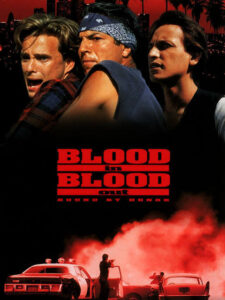 I’m ashamed I hadn’t watched Blood In Blood Out (aka Bound by Honor, the worse title, no doubt) before now. What a movie. I was driven to it finally by Floyd Mutrux’s involvement with the script (been on a little Mutrux kick—I love Aloha, Bobby and Rose). I was surprised as hell that suspense novelist Ross Thomas gets a “story by” credit—weird and unexpected, but I guess he had some input early on. Somehow had no idea whatsoever that poet and memoirist Jimmy Santiago Baca also worked on the script—director Taylor Hackford credits him with making the most significant contributions. No doubt so much of what makes it so special comes from Baca. I was introduced to Baca’s poetry junior year of high school by my English teacher, an ex-cop with a motorcycle who turned me on to Thomas Wolfe, Tim O’Brien, and many more of my favorite writers. We read some of those early poems from Immigrants in Our Own Land & Selected Early Poems, written while Baca was in prison. Baca’s work hit hard right out of the gate. I would’ve chased this down sooner had I known he wrote it. I also should say I guess I had some preconceived negative ideas about Hackford as a director—I’m not sure why, since it turns out I hadn’t really seen any of his other movies, aside from Dolores Claiborne, which I liked a lot. (I’ve since done first-time watches of The Idolmaker and Against All Odds, both excellent.) What a cast in Blood In Blood Out. All the main actors are great—Jesse Borrego, Benjamin Bratt, Enrique Castillo, and Damian Chapa—but some of the biggest pleasures come from the Murderers’ Row of supporting performers (Delroy Lindo, Ving Rhames, Danny Trejo, Billy Bob Thornton, Biff from Back to the Future). It’s a saga that tells a classic fate-and-destiny story of three brothers—actually, half-brothers Paco (Bratt) and Cruz (Borrego) and their biracial cousin Miklo (Chapa)—in East Los Angeles in the ’70s and ’80s. Early on, they’re tied up in gang life and then things go wrong. Paco joins the military and eventually becomes a cop. Cruz is an artist who goes on to have great success but also develops a heroin habit. And Miklo goes to jail, where he learns very quickly what he must do to survive. Baca’s contributions to the prison part of the story make it particularly unique and powerful. It’s cut from the mold of classic gangster pictures like White Heat and Angels with Dirty Faces but also has echoes of The Godfather, Scarface, and Boyz n the Hood. Adan Hernandez’s paintings (which double as Cruz’s paintings) are incredible. An epic, unforgettable movie. An instant all-timer. The 190-minute director’s cut is currently on Prime Video.
William Boyle is the author of the novels Gravesend, The Lonely Witness, A Friend Is a Gift You Give Yourself, City of Margins, Shoot the Moonlight Out, and Saint of the Narrows Street. His novella Everything Is Broken was published in Southwest Review Volume 104, numbers 1–4, and he co-edited (with Claudia Piñeiro and Frances Riddle) the noir issue (Volume 108, number 3).
Illustration: Jess Rotter
